
The saddler's tools
Forty-eight objects, and the trade with which the house opens
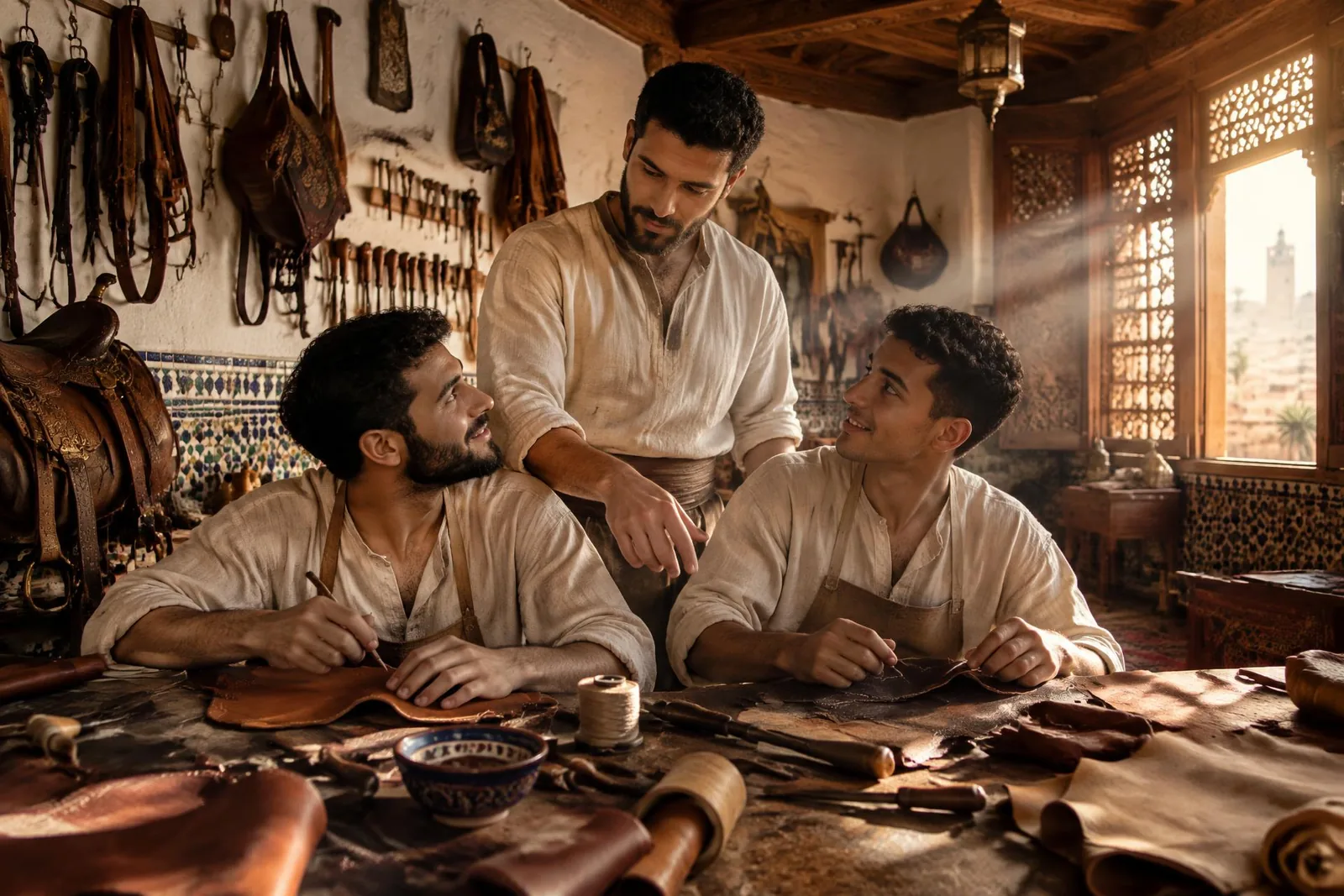
The house opens with a single workshop, the saddlery, which gathers leather, wood and metal. A complete harness calls for tanning and two-needle stitching, the shaped tree and the forging of buckles, stirrups and spurs: three trades around one object.
The master saddler does not make the saddle alone: he directs it. He buys the materials, conceives the design, distributes the work and assembles. The felt belongs to the feltmakers, the tree to the carpenter, the stirrups and the bit to the craftsmen in brass and damascened iron. His own body of work is the embroidered parure, with everything that precedes it and everything that follows.
A Fassi saddle is made of thirty-eight pieces, each with a name, and takes between six and twelve months of work. A master makes no more than forty a year.
The workshop itself owns almost nothing costly. It owns the time of the apprenticeship, and the tools are its library.
The sign of the workshop
The eleven arts
No craftsman, alone, makes a saddle. The saddler directs it: he buys the materials, conceives the design, distributes the work and mounts the thirty-eight pieces. Ten other trades work around him, and a complete parade saddle takes between four and twelve months.
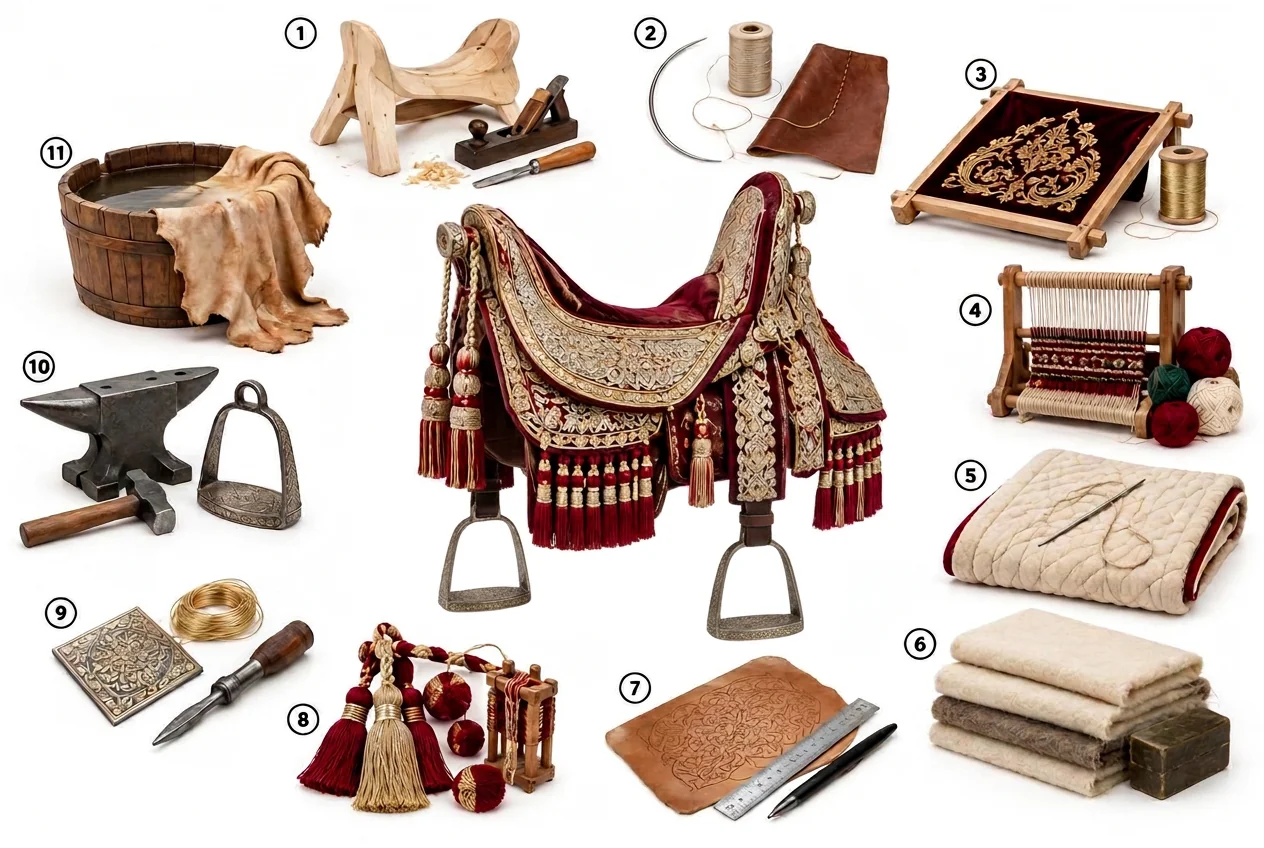
1. The carpenter. The tree in Atlas cedar or orange wood, seasoned for years. He is first in the chain: everything else is built around him.
2. The saddler. He covers the tree, cuts, stitches and mounts. He fits the saddle to the horse's back and sets it for the parade.
3. The embroiderer. He embroiders by hand the leather and velvet stretched on the frame, with gold and silver thread.
4. The weaver. The woollen cloth that lies beneath the saddle and gives the whole its ground of colour.
5. The quilters. The layered quilt that cushions between the cloth and the tree.
6. The feltmaker. The seven felts fulled with beldi soap, which make the same saddle sit well on one horse after another.
7. The draughtsman. He keeps and renews the repertoire, and prepares the cartoons that embroiderer and saddler follow.
8. The passementier. Tassels, pompoms and fringes: everything that sways at the gallop comes from his bench.
9. The damascener. He inlays gold and silver into the iron of the bit and the plaques.
10. The blacksmith. He forges the stirrups, the bodies of the bits, the plaques and the studs that the damascener will decorate.
11. The tanner. He delivers no single piece: he delivers the matter of all of them. The saddler never sees the animal's skin.
This is why, above the workshop doors, no sign is made by the workshop that bears it.
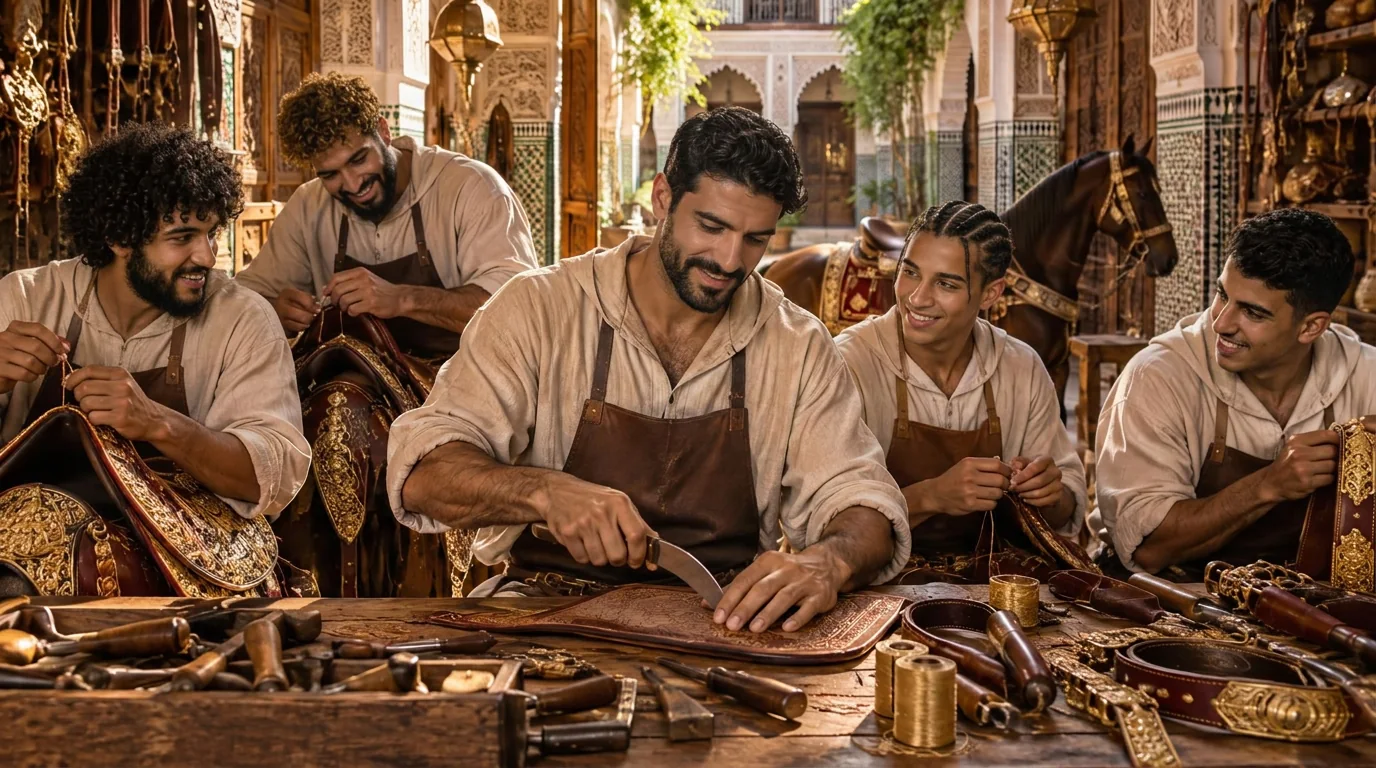
The bench
The saddler works seated, often with the piece held between his knees. The workshop owns little, and almost all of it is wood, steel and leather.
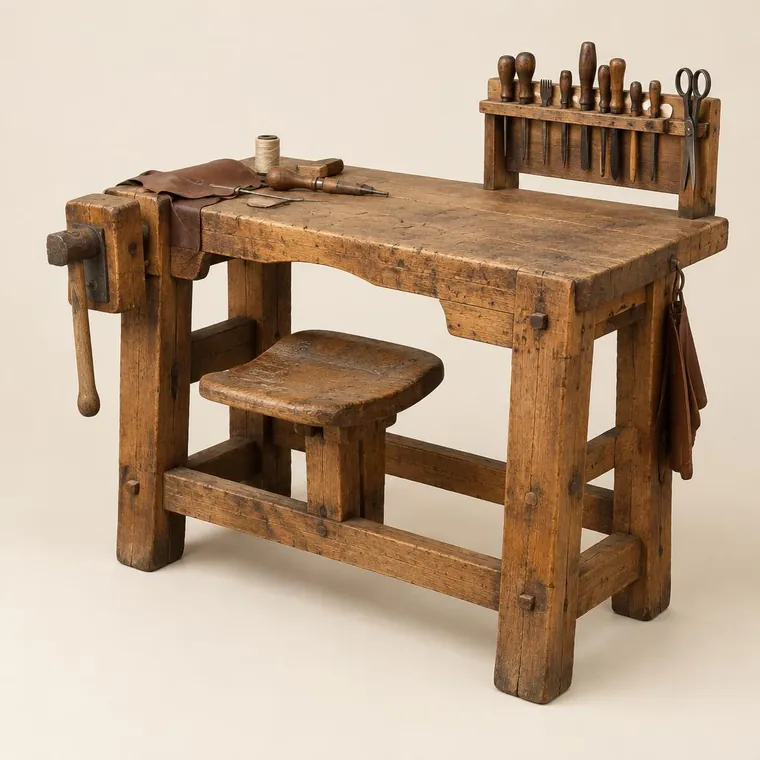
The workbench
A massive hardwood top, hollowed and polished by use. Cutting is done by pressing, not sawing: a bench that flexes ruins every cut.
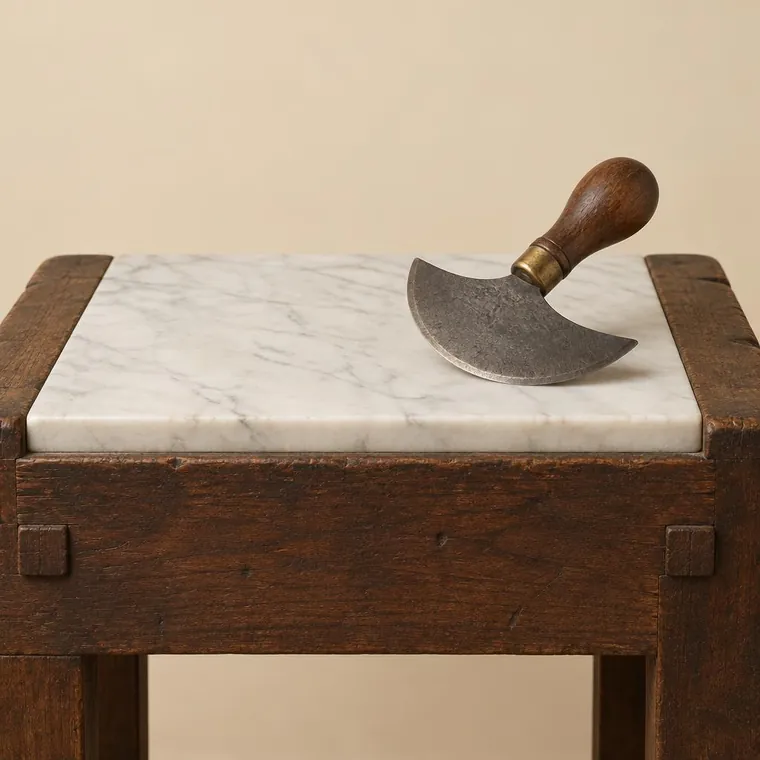
The cutting slab
Marble or granite set into the top. It does not blunt the edge and does not scar, as wood would.
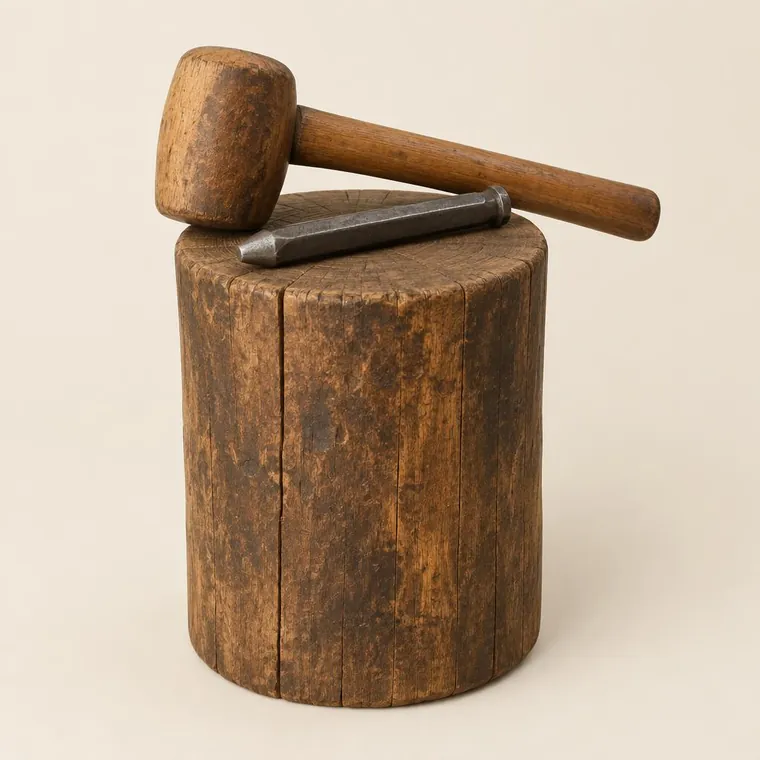
The block
An end-grain log, for striking punches and stamps without rebound.
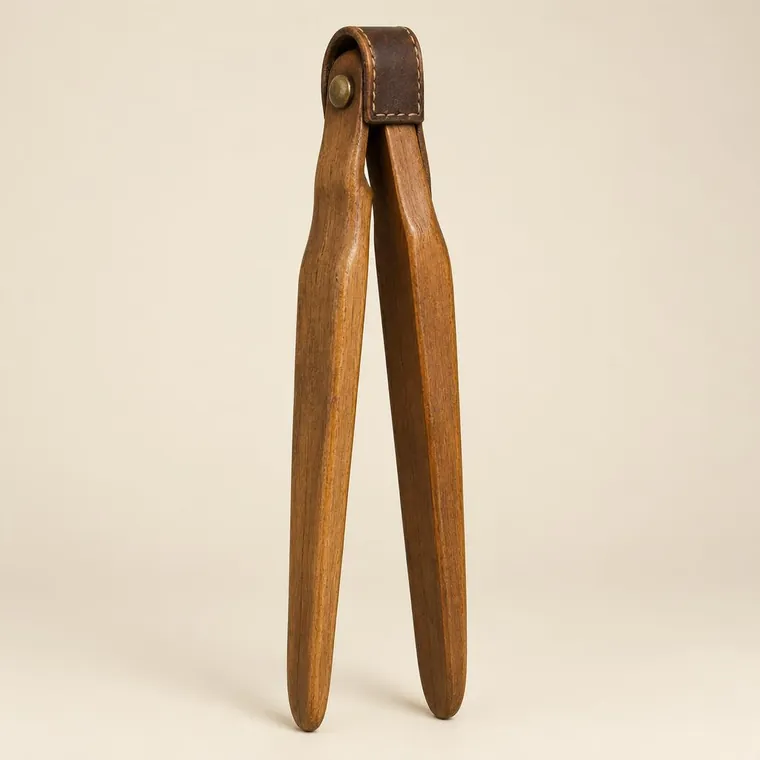
The stitching clamp
A wooden clamp held between the knees: it grips the two pieces and leaves both hands free for the two needles. Without it, saddle stitch cannot be worked.
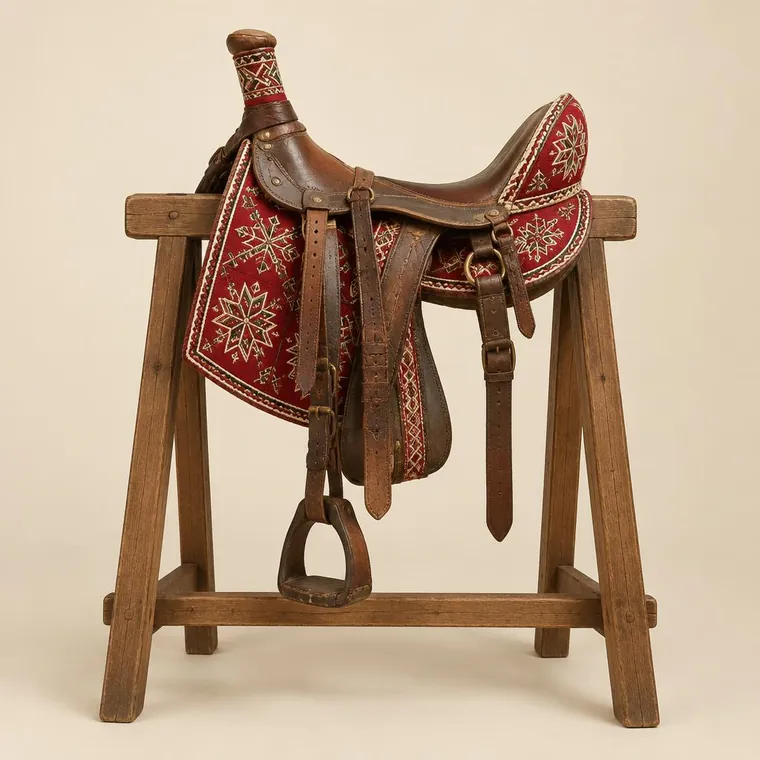
The saddle horse
It holds the piece once mounted, when it can no longer go into the clamp.
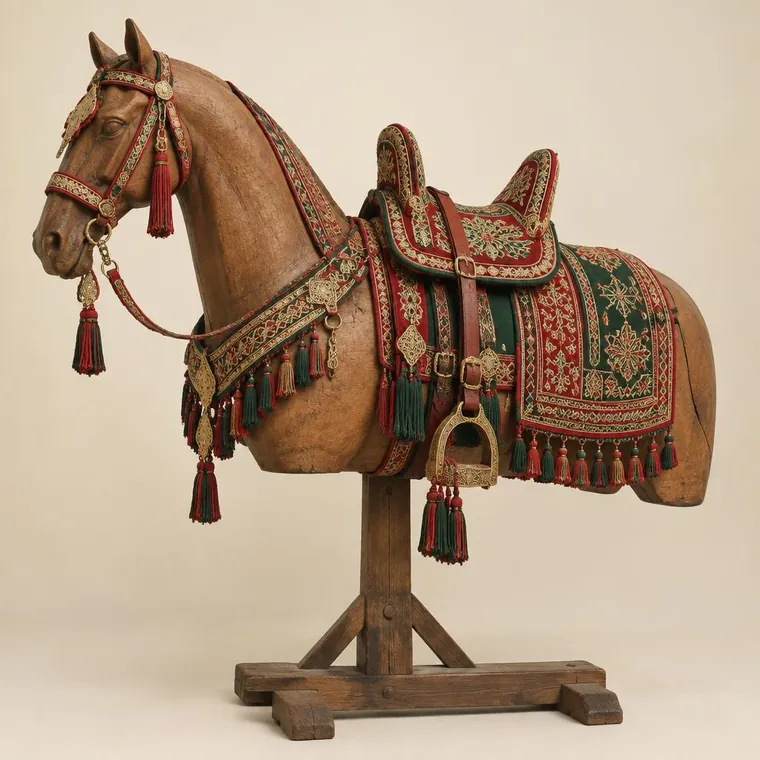
The wooden horse
The form on which the whole harness is tried before it ever sees a living animal. It is where everything else ends up.
Drawing and templates
The motif is drawn on paper coloured with saffron, then waxed so it survives repeated use. The templates are a workshop's accumulated capital, and the first property a master passes on.
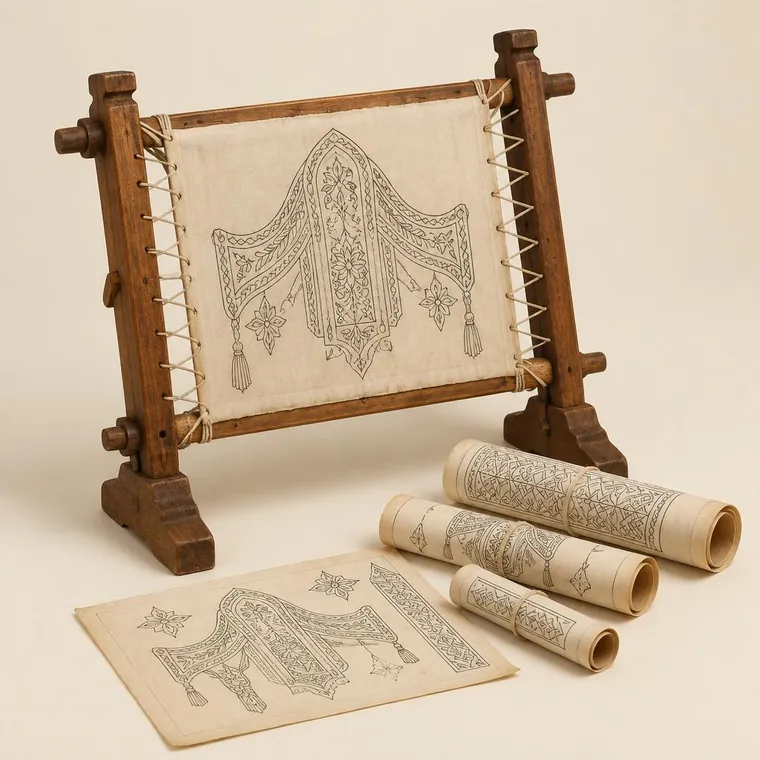
The templates
qālab
One pattern for each piece. A Fassi saddle has thirty-eight, each with a name of its own.
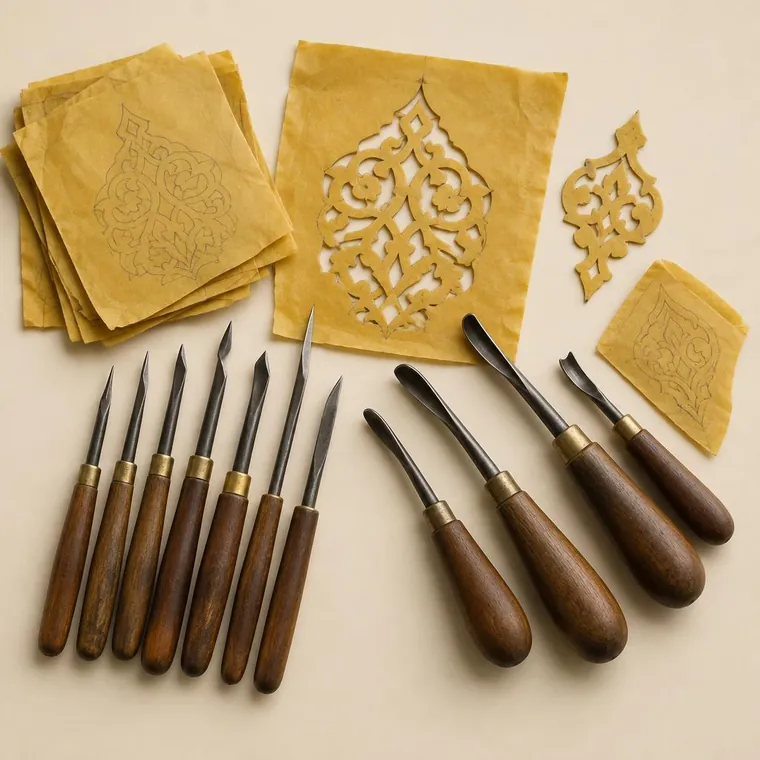
The template graver
Fine blades for cutting the motifs from the waxed paper. It is carving, not scissor-work: that edge will be the edge of the embroidery.
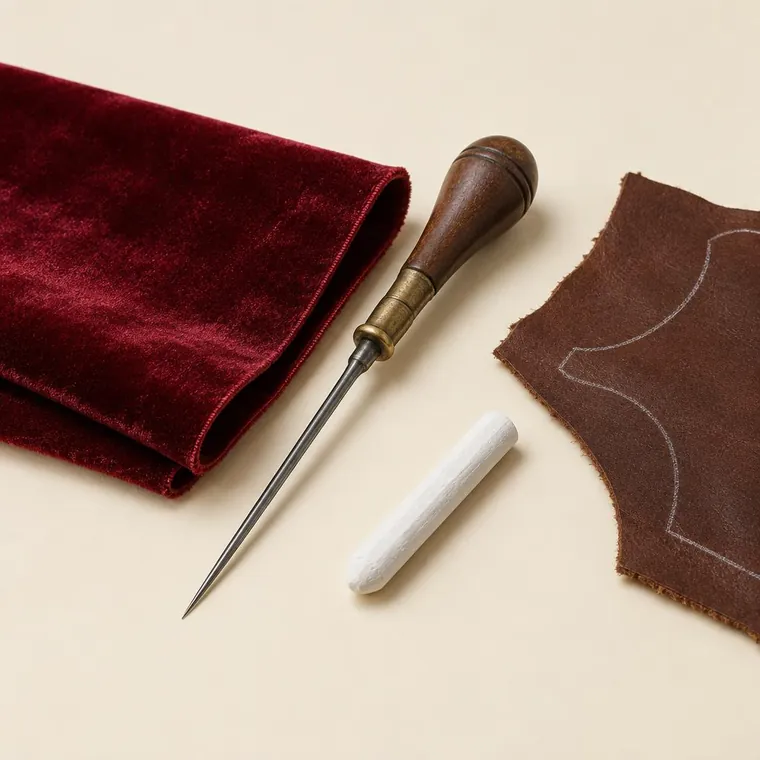
The tracing point
It carries the template onto leather, satin or velvet without incising them.
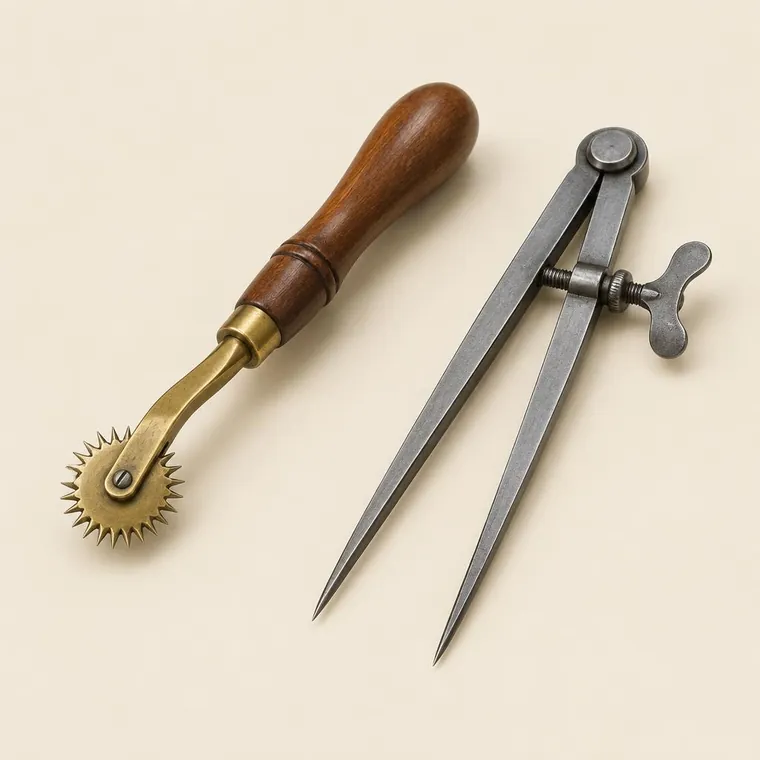
The dividers and the wheel
They mark the stitching line at a constant distance from the edge. If that line is not parallel, there is no remedy.
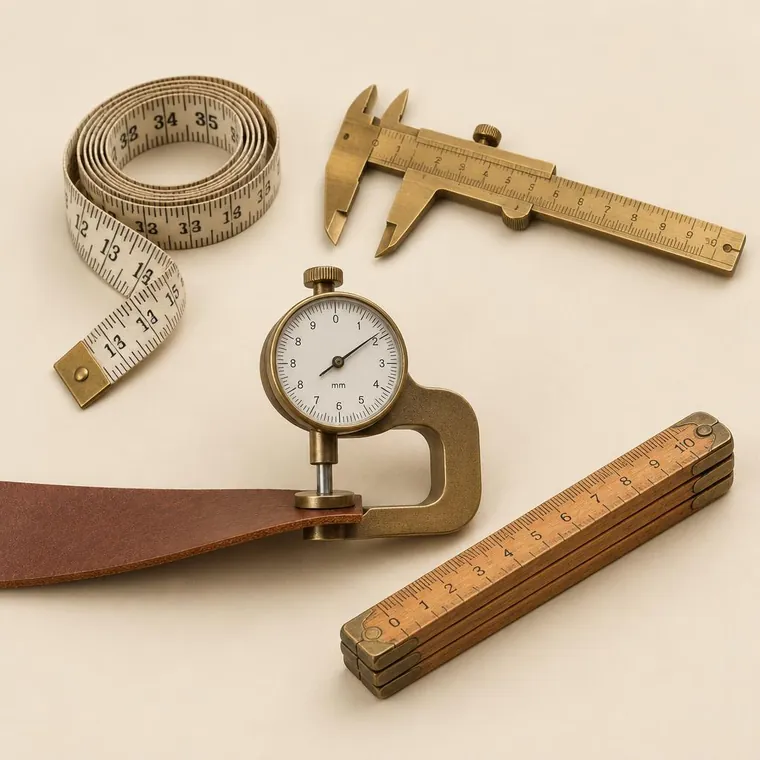
Tape and thickness gauge
Thickness is chosen, not accepted: a three-millimetre strap and a four-millimetre one are two different objects.
Cutting
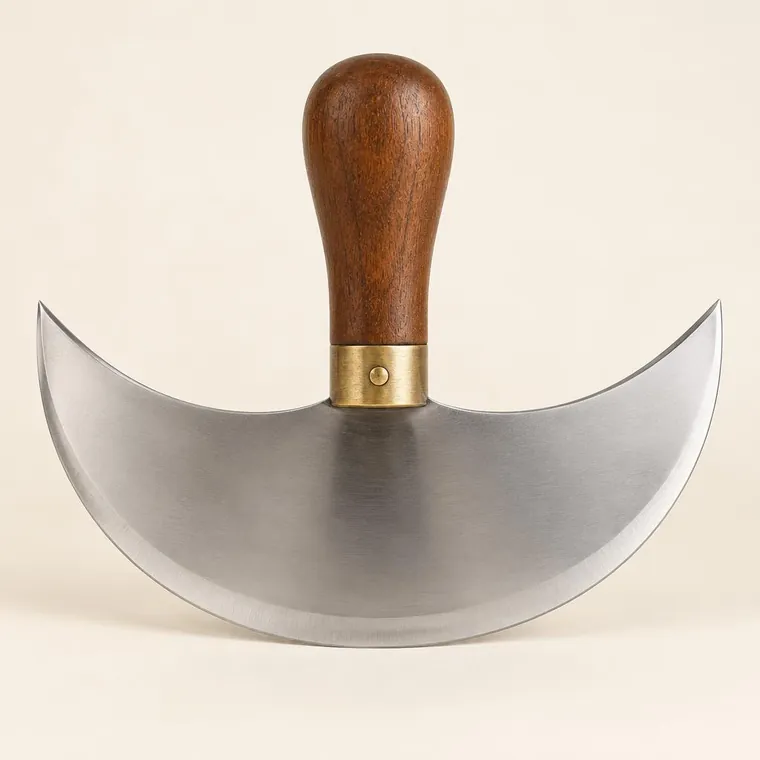
The round knife
khedmī
The sign of the workshop. A half-moon blade with a single handle at the centre of its back: it cuts on the curve and, with the back, it pares. One tool that does half the work, and the hardest to govern.
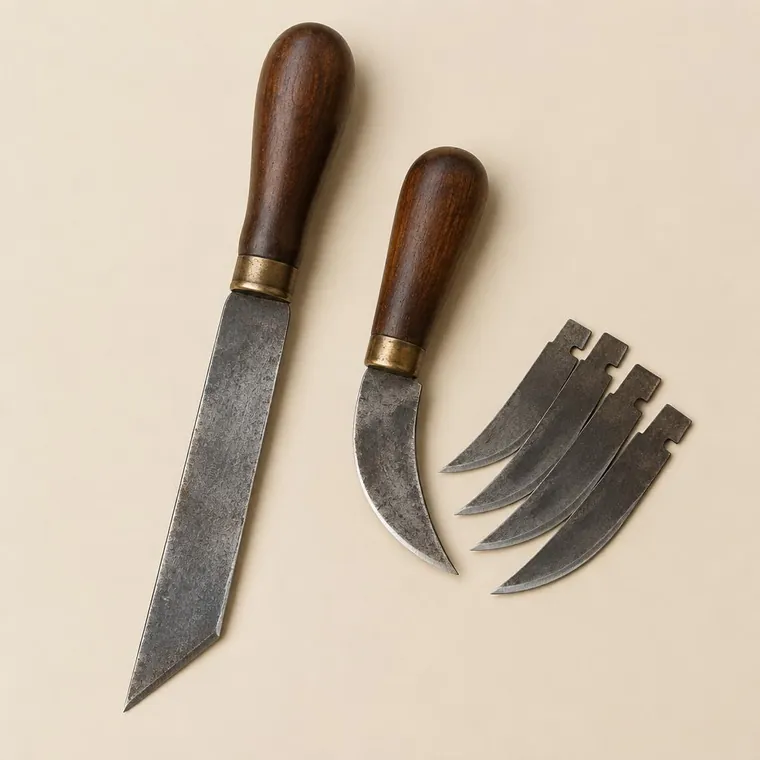
The head knife
A straight blade with an oblique point, for long cuts against the rule, and the trimming knife for small shapes.
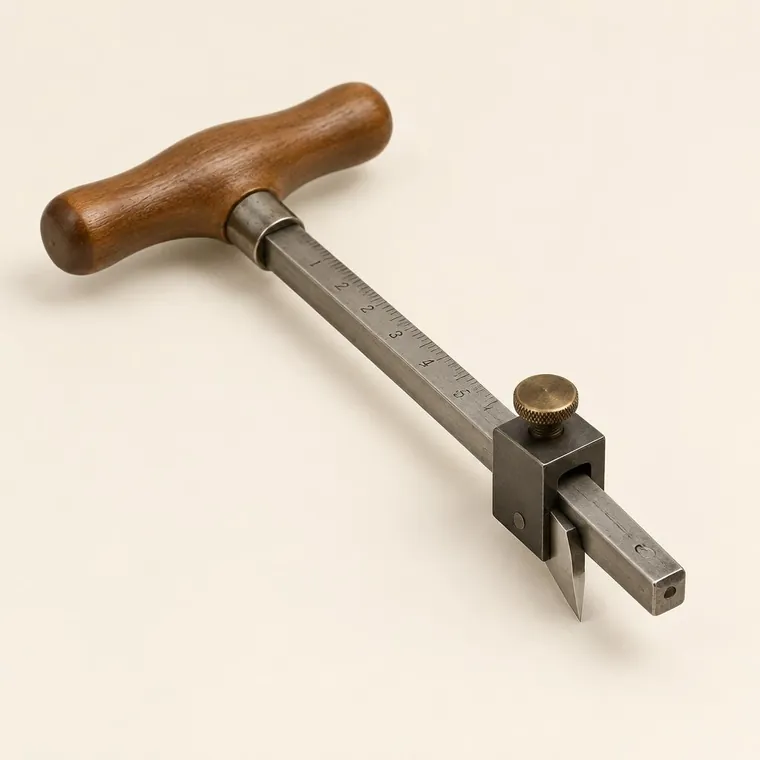
The draw gauge
An adjustable guide that cuts straps of constant width: girths, belly straps, reins. Without it, every strap differs from the next.
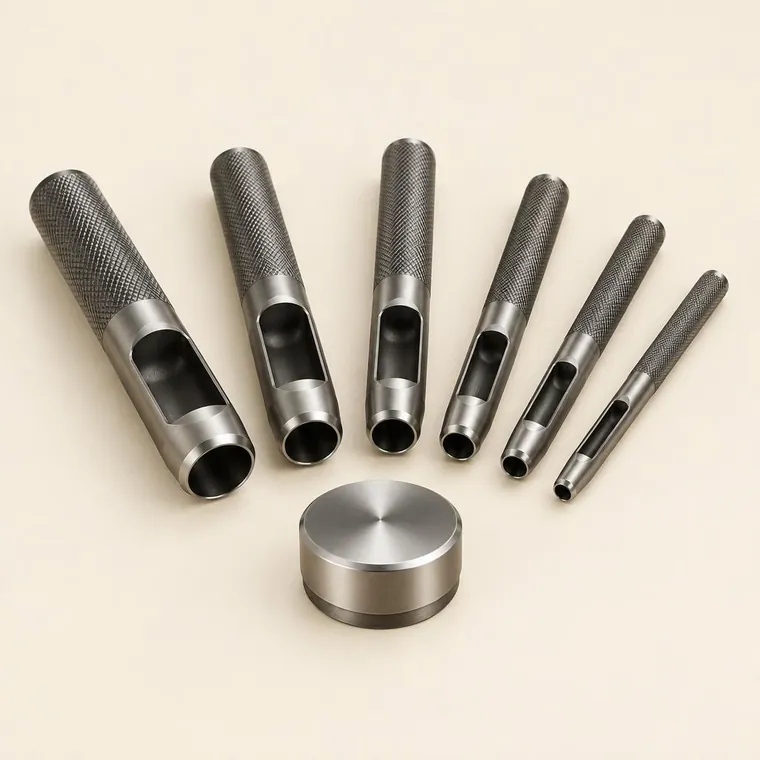
The punches
A full range of diameters, for buckle holes and eyelets.
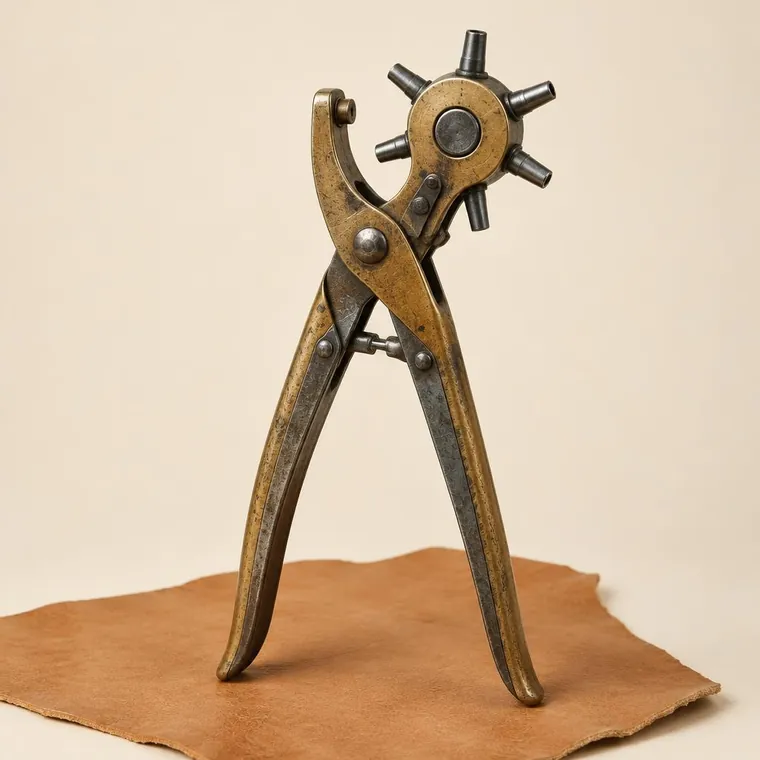
The revolving punch
The hand version, less precise but indispensable on pieces already mounted.
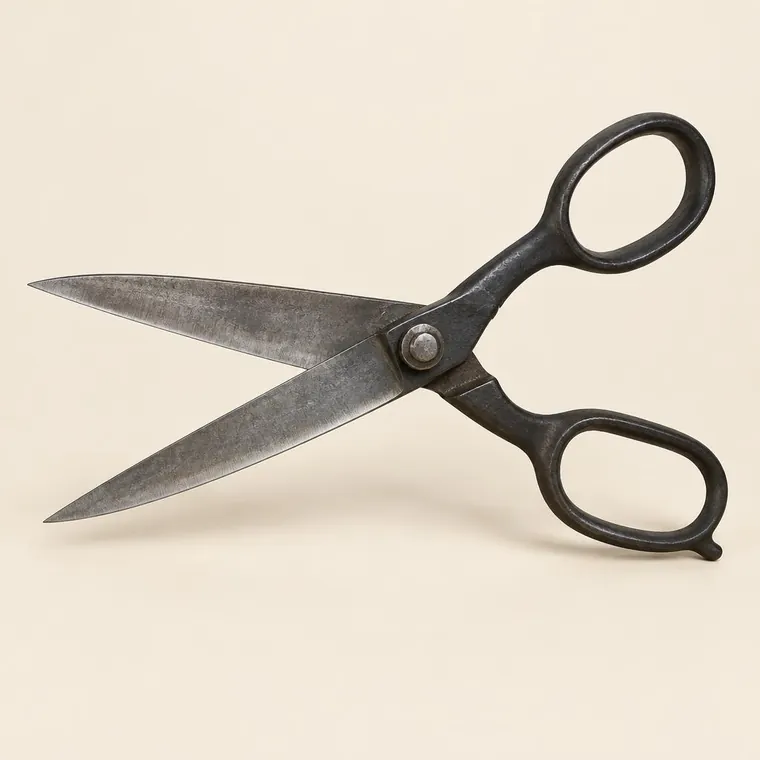
The saddler's shears
miqaṣṣ
Heavy, often with one rounded point, for thin skins, felts, linings and passementerie.
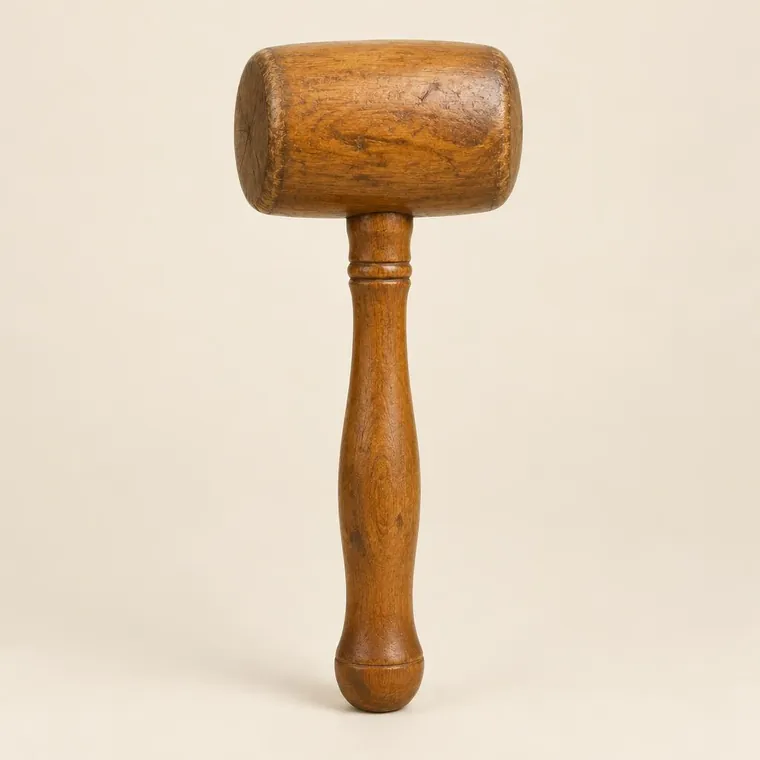
The mallet
In hardwood or compressed leather, never metal: a steel hammer ruins the head of a punch in a few blows.
Paring and sharpening
In saddlery one sharpens every day. A dull blade does not cut leather: it tears it, and it tears the hands too.
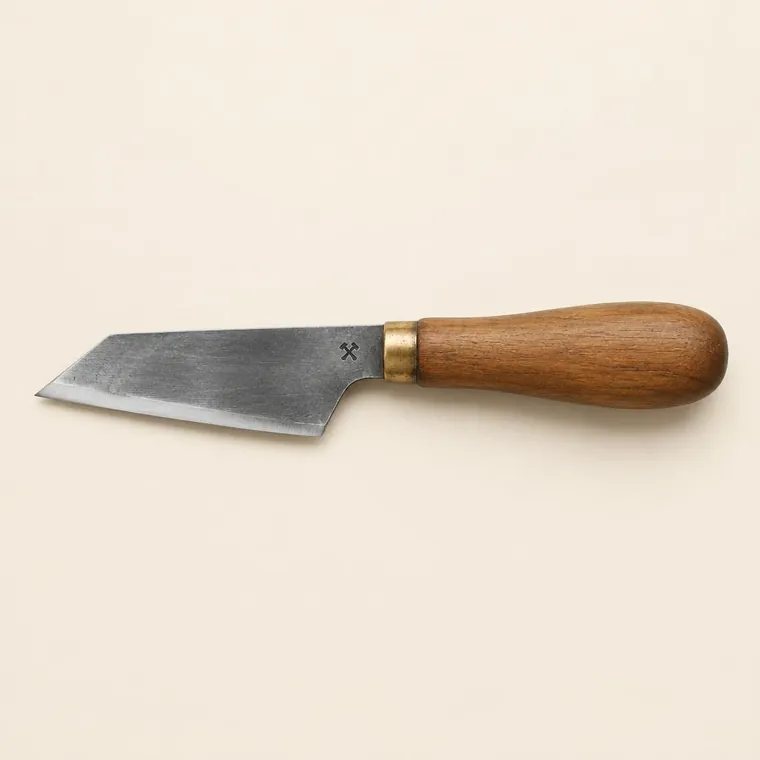
The paring knife
mishraṭ
It thins the edge so that two overlapping lips make no bulk. It is the work that separates a well-made piece from a coarse one.
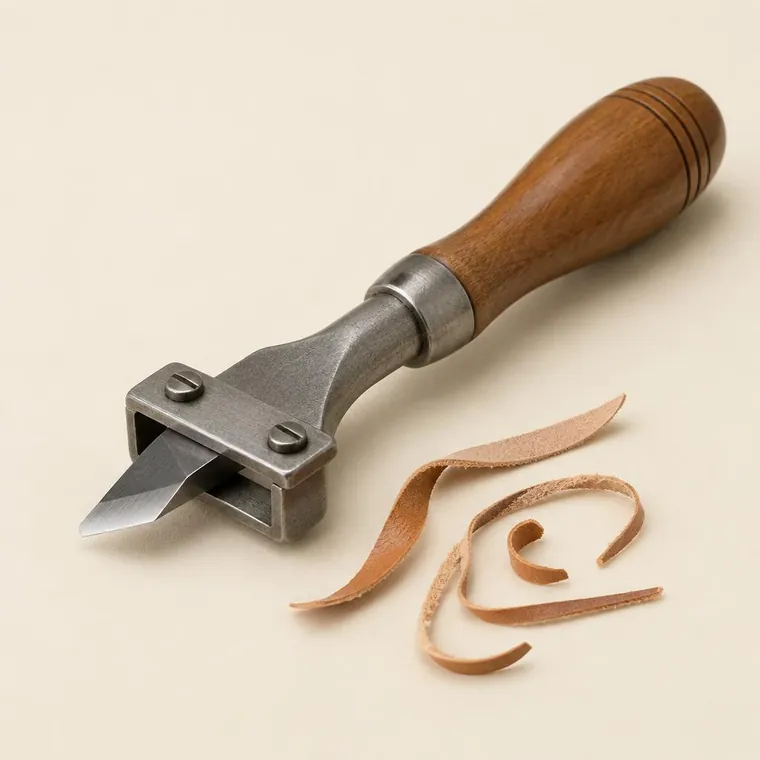
The safety beveler
A guided version, safer, for those learning.
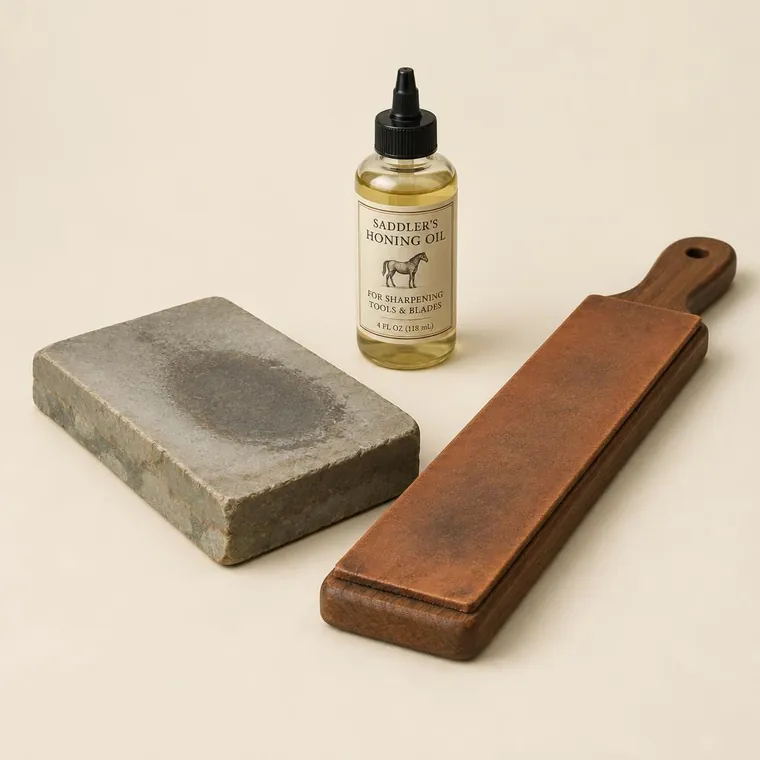
The whetstone
ḥajar as-sann
Double-grit, water or oil: the edge is renewed before it is missed.
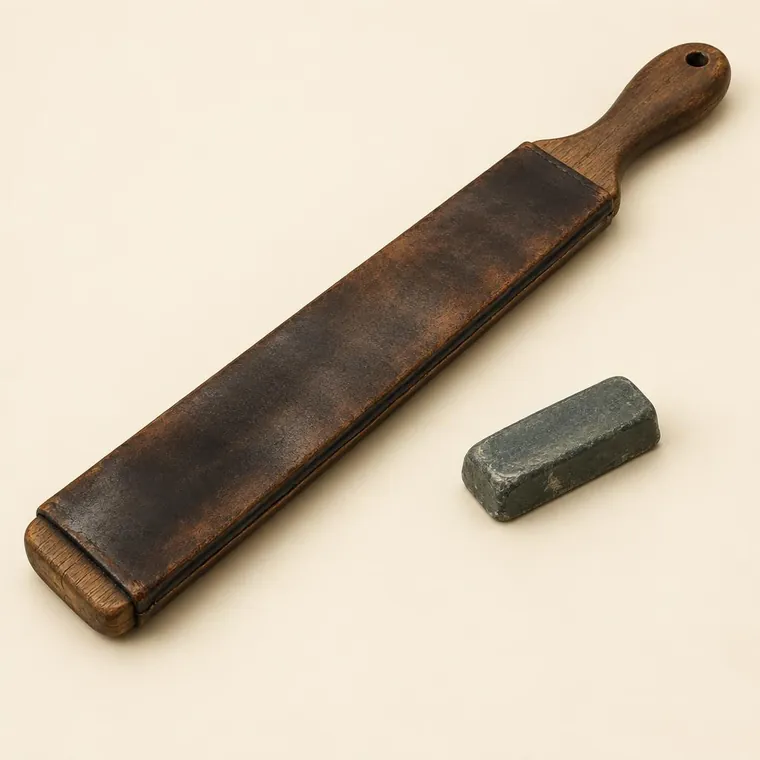
The strop
Old waxed leather with abrasive paste: it removes the burr and gives the final edge. It belongs with the stone.
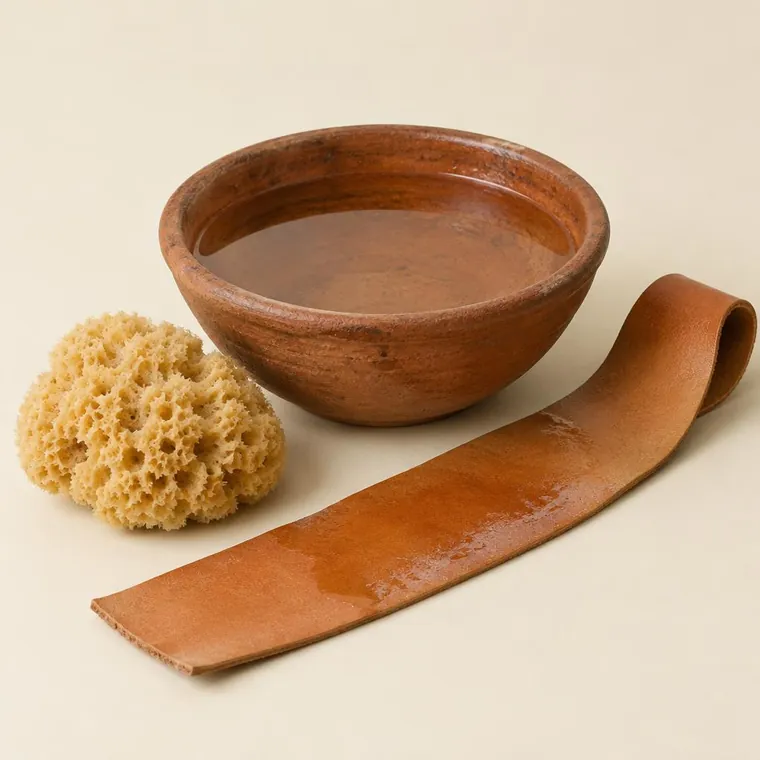
Water and sponge
Leather is worked cased to the right point: too dry it cracks, too wet it loses the impression.
Marking and stitching
The stitch is two needles and a single thread, through holes prepared in advance. It holds even if one stitch breaks: that is what makes a saddle last forty years.
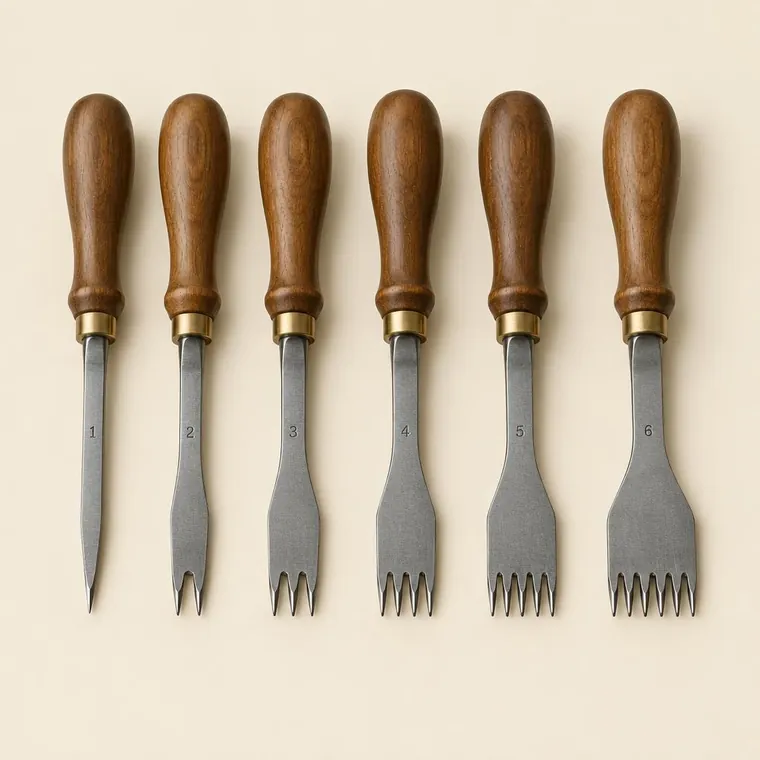
The pricking irons
A series by pitch, from one to six prongs. Struck into the leather, they mark the slant and spacing of the stitches: this is where it is decided whether a seam will be beautiful.
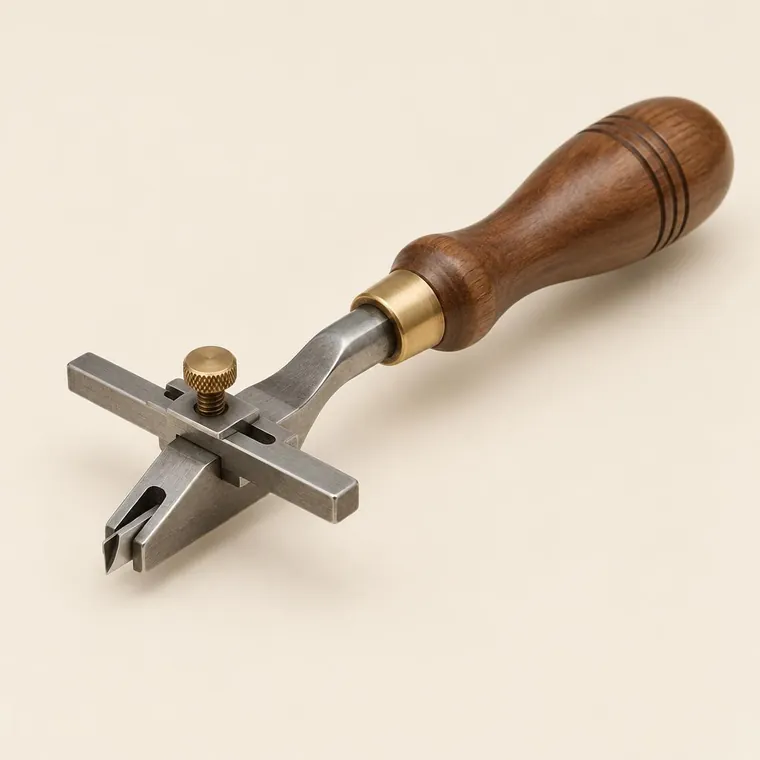
The groover
It cuts the channel the thread will run in: the stitching sits below the surface and does not wear.
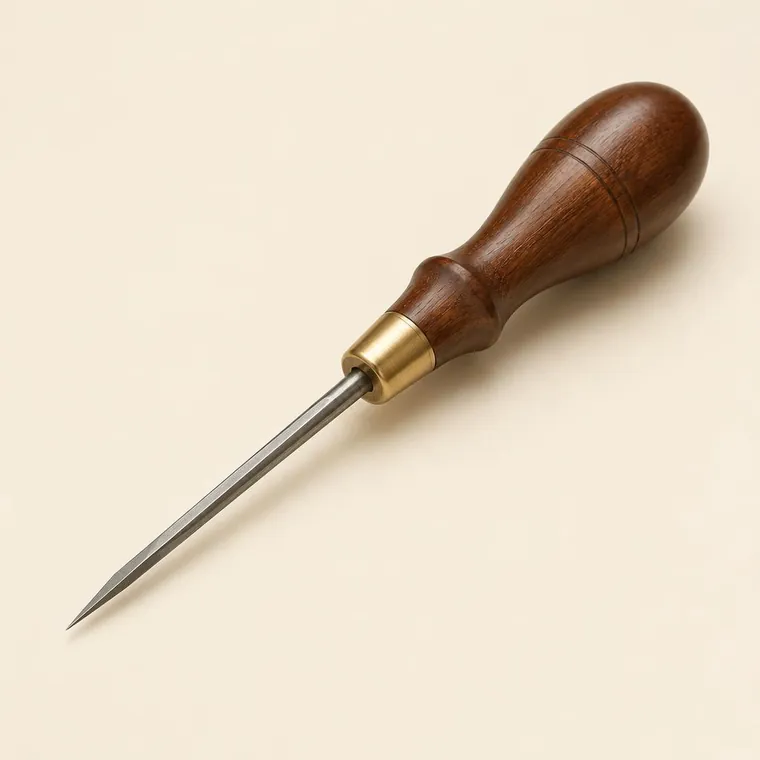
The awl
mikhraz
A diamond-section blade on a pear handle, pushed with the palm. Each thrust opens an angled hole at the right pitch for the two needles.
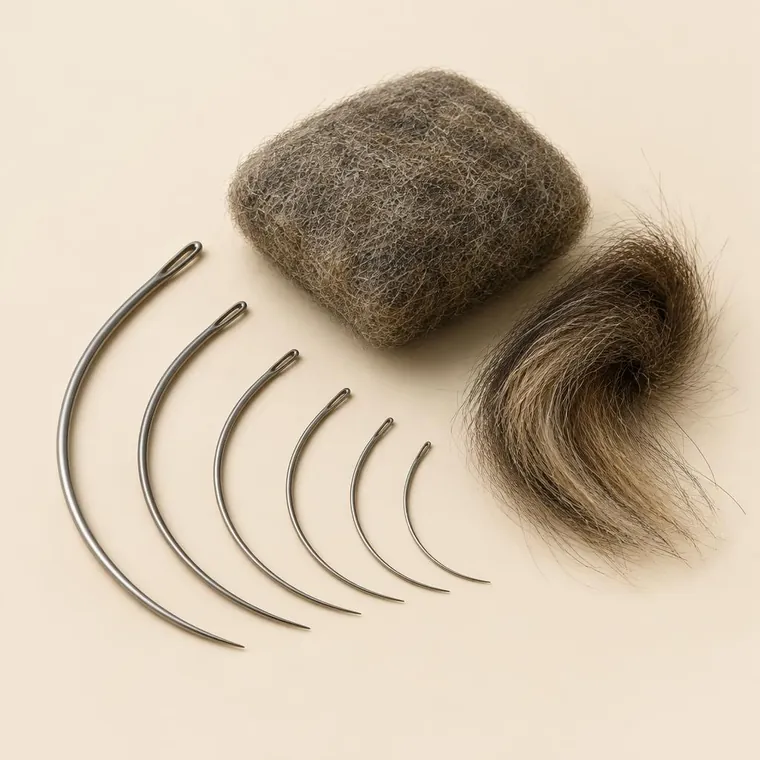
The curved needles
For blind passages and for stuffing, where a straight point cannot reach.
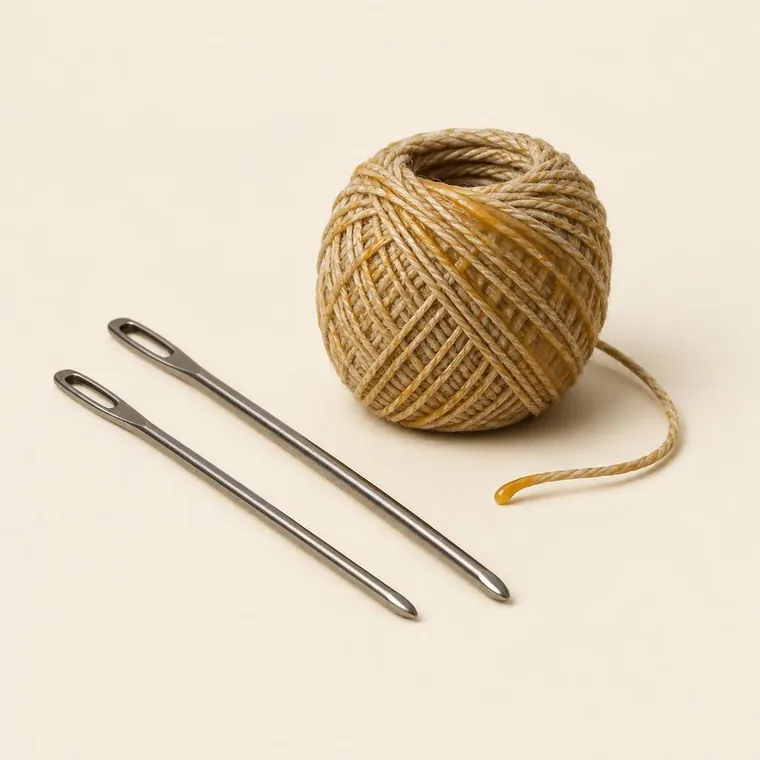
Needles and pitched thread
Blunt-pointed needles, because they must not pierce but enter the hole the awl has made. Linen thread is twisted and pitched: the pitch fills the hole and locks the stitch.
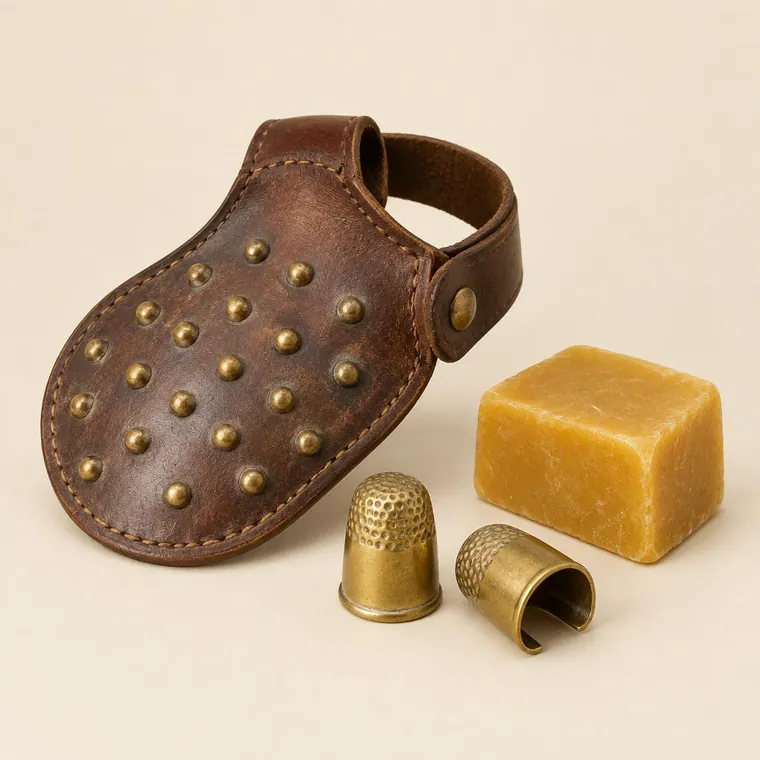
The palm iron and the wax
To drive the needle through thicknesses the hand alone cannot manage, and to draw the thread through wax when it loses its grip.
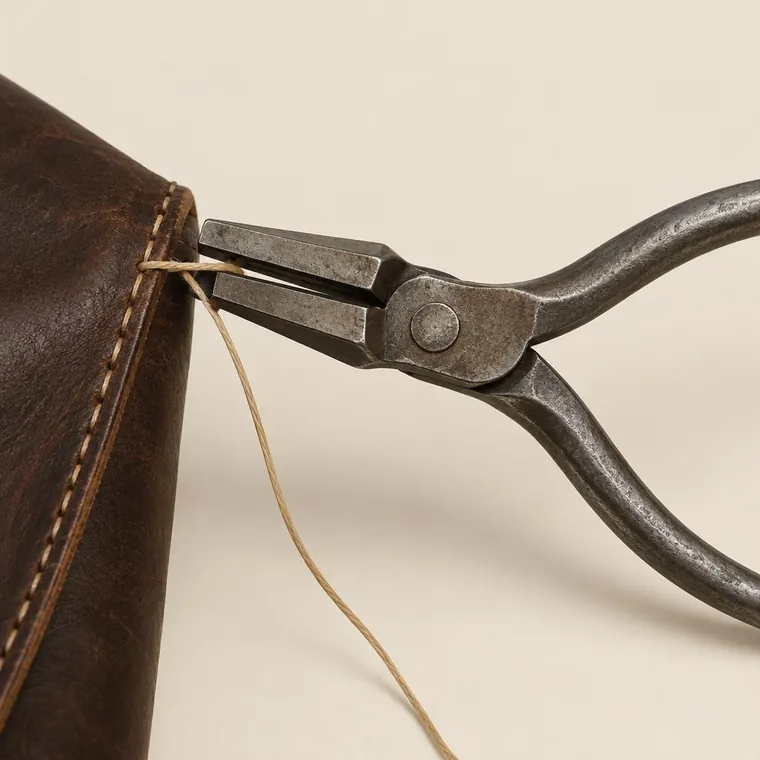
The pliers
They pull the thread, close the stitch, stretch the leather over the tree.
The edges
A master is known by his edges.
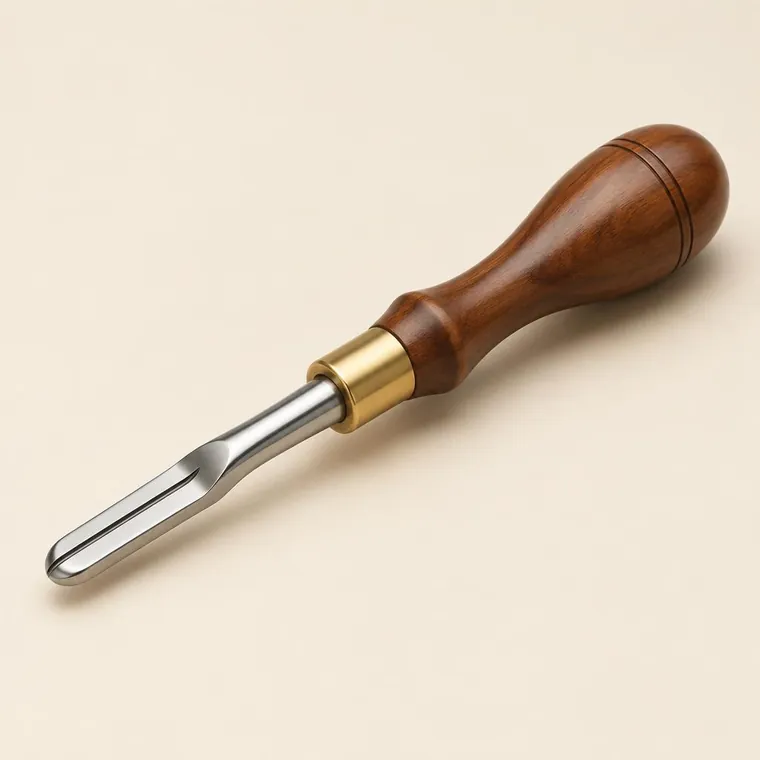
The edge beveller
It takes off the sharp arris: an unbevelled edge cuts the hand and wears away in a month.
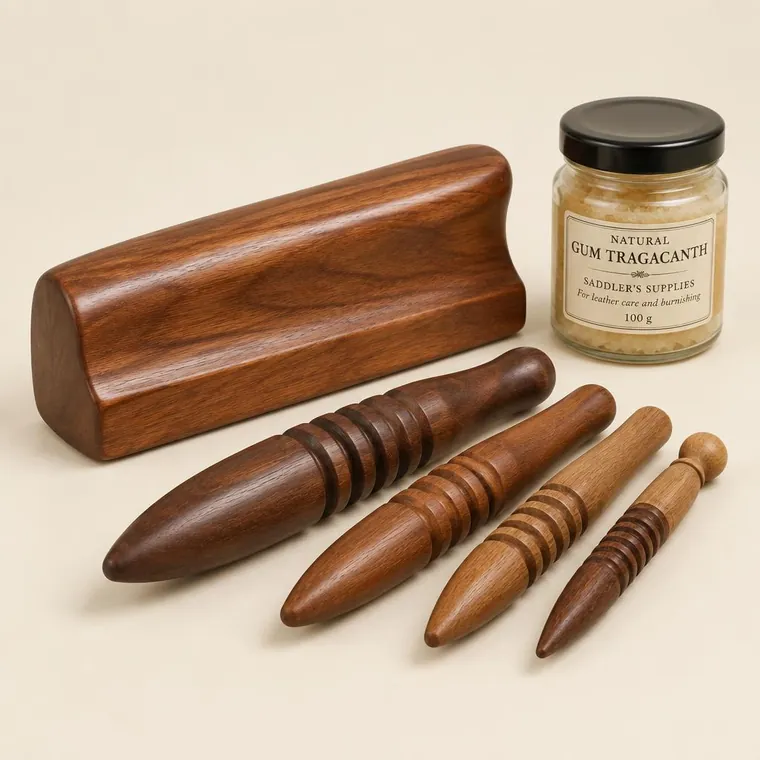
The burnisher
misqala
Grooved, in hardwood or bone. With water and wax it compacts the fibre until the edge turns glassy. No machine imitates it.
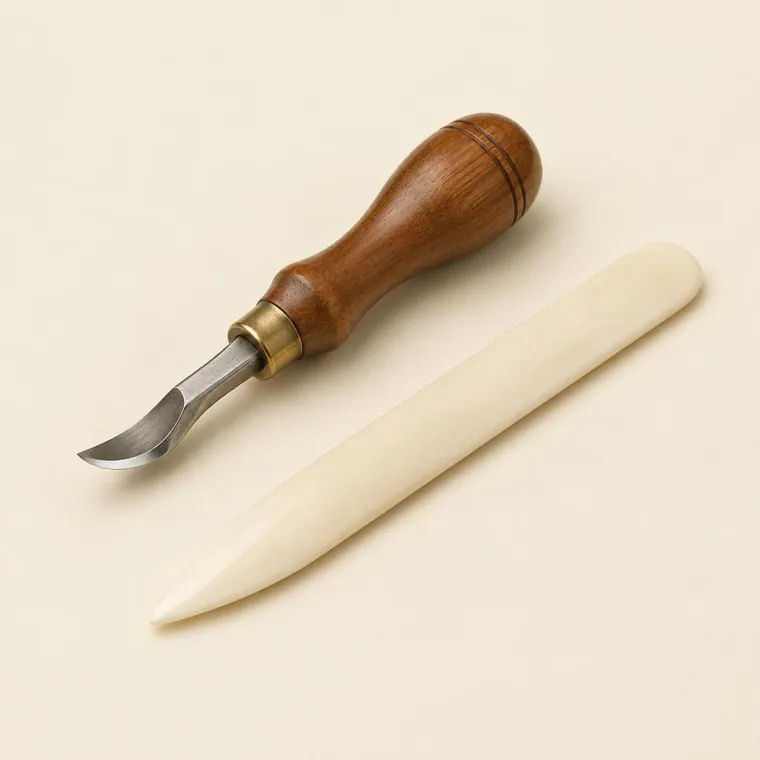
The folder
It folds, flattens and aligns, without marking the grain of the leather.
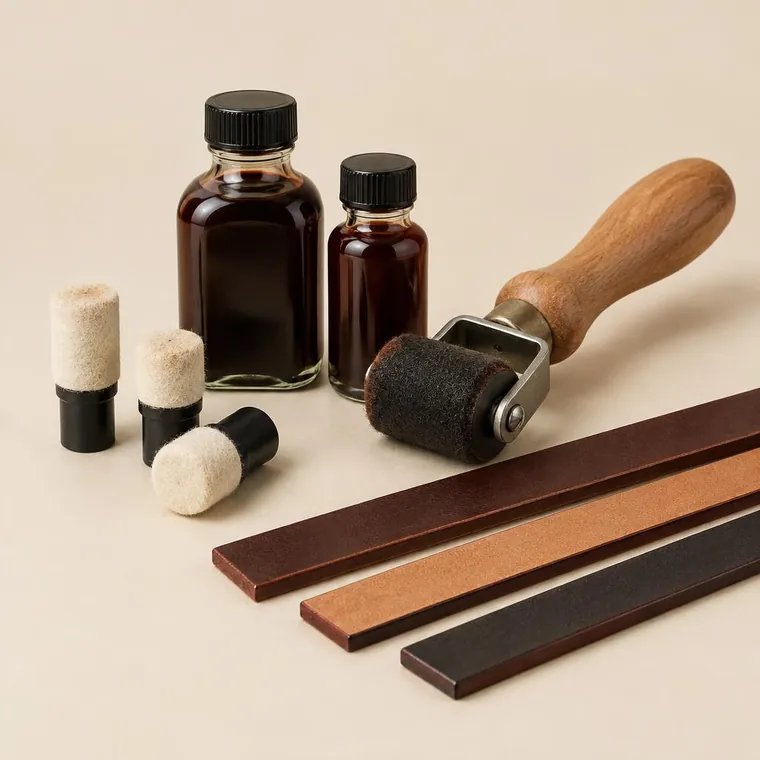
Edge dye
Laid on with a wheel, in several passes, and left to dry according to the effect wanted.
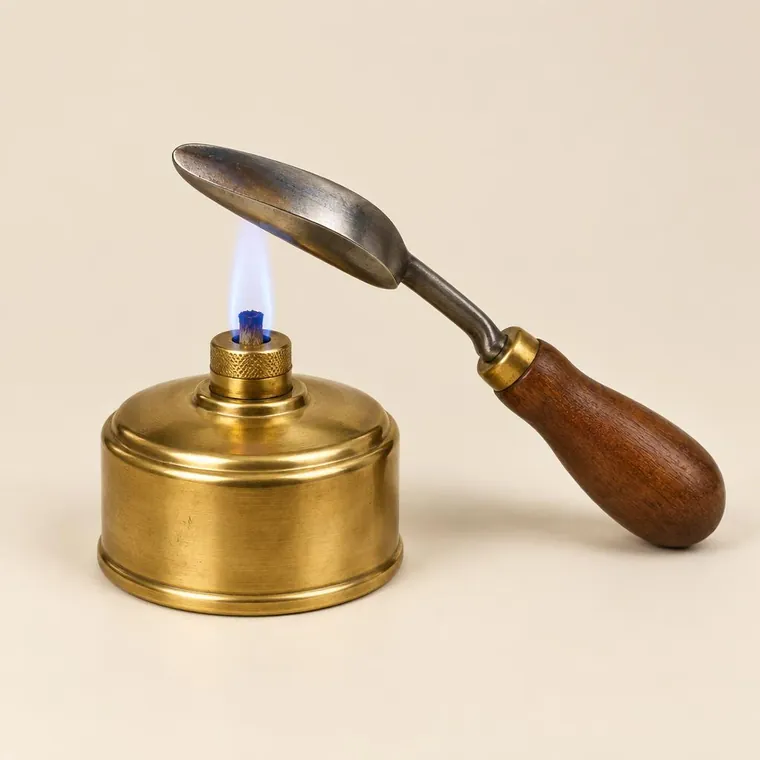
The spirit burner
It heats the creasers: the hot line is bright and final.
Gold
This is the work the saddlery shares with the workshop of the book, and the reason the two share the master in part.
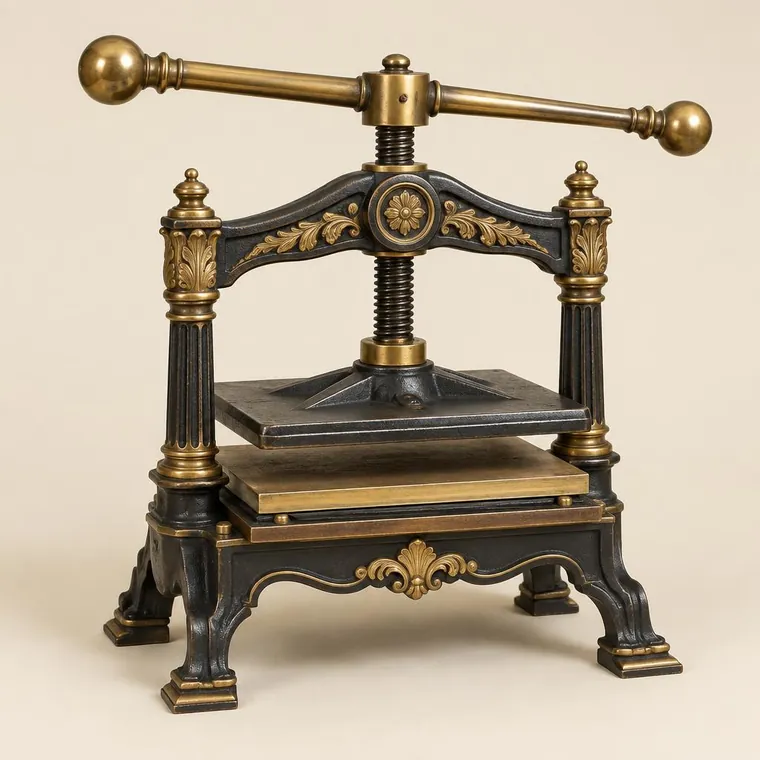
The hot press
It impresses gold into leather with pressure and heat.
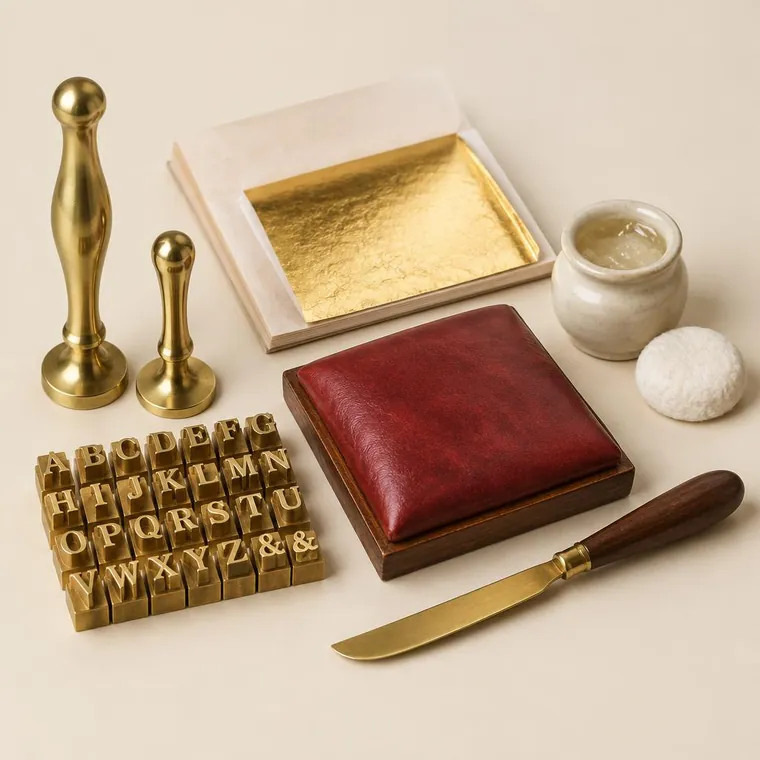
The tools and the gold leaf
Heated punches, leaf, cushion and gilder's knife.
Embroidery
This is what makes the saddle of Fez what it is: the gold threads do not pass through the leather, they lie on the surface and are fixed with hidden stitches of silk.
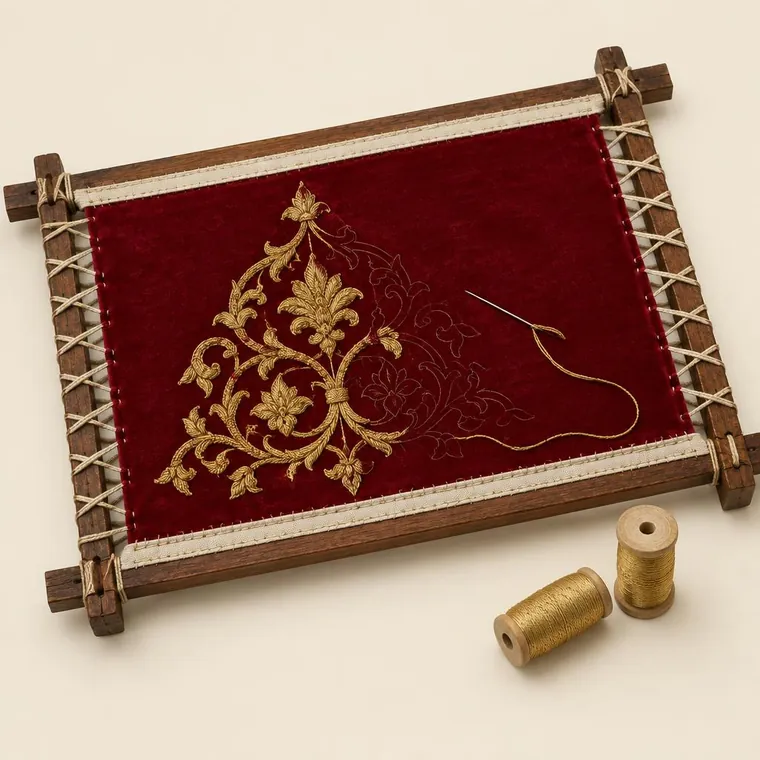
The frame
ṭār
Rectangular, two bars and two slats. The velvet is stitched to the webbing and drawn taut with cords: the stretched leather is the table on which one embroiders.
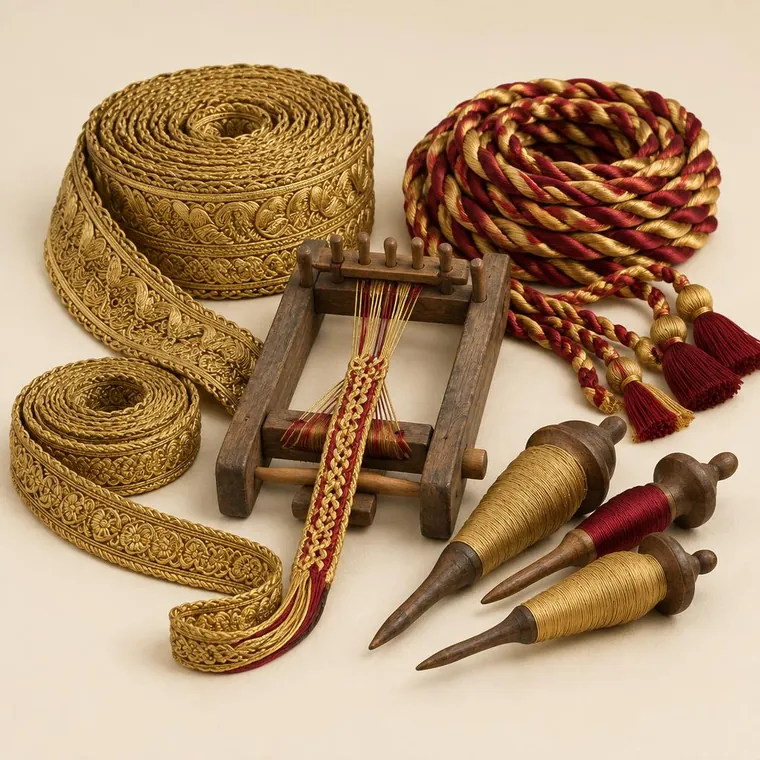
The passementerie
sfīfa
Cords and galloons that border the panels and close the joins.
Wood and stuffing
The tree comes from the carpenter, bare. The saddler covers it and stuffs it: between the wood and the animal's back nothing hard may remain.
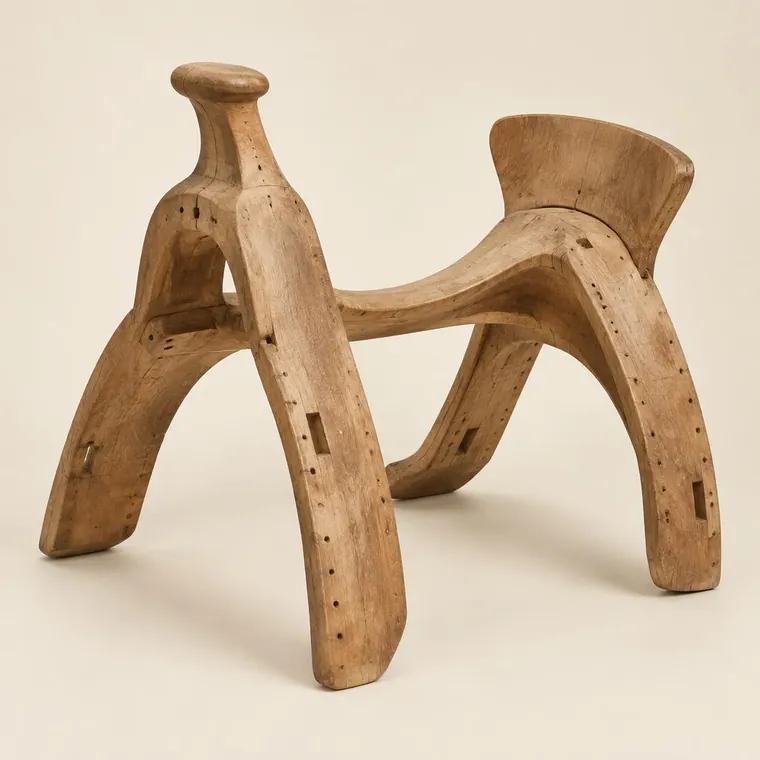
The tree
qarbūs
In orange, olive or cedar wood, covered with goatskin shrunk by drying. Every horse has a back, and the wrong tree injures it.
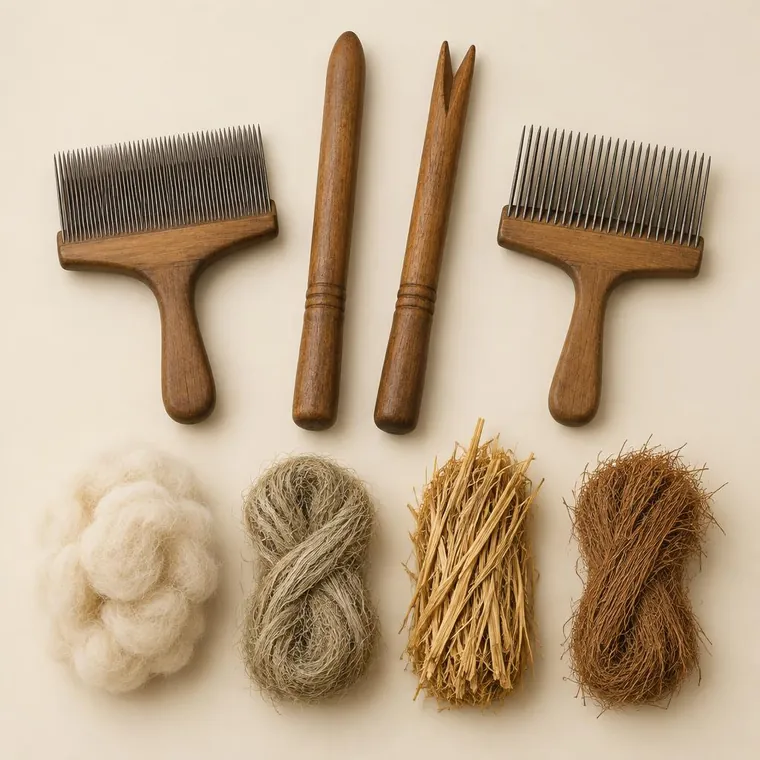
The stuffing rod
miḍrab
It pushes and packs wool, hemp and dwarf-palm fibre into the panels. Badly packed stuffing injures within the hour.
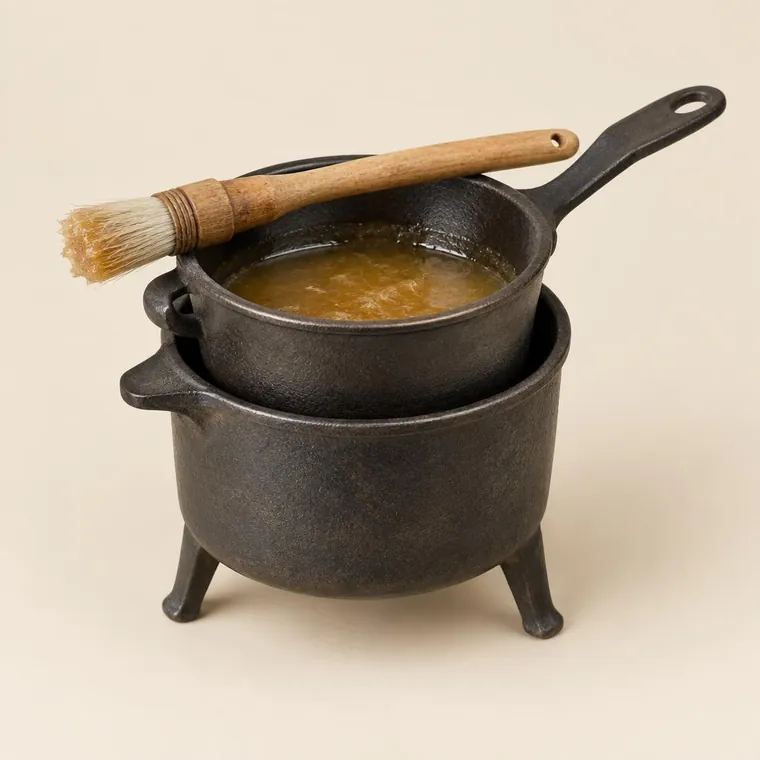
Hide glue
Animal glue melted in a water bath, to fix turnings and returns before stitching.
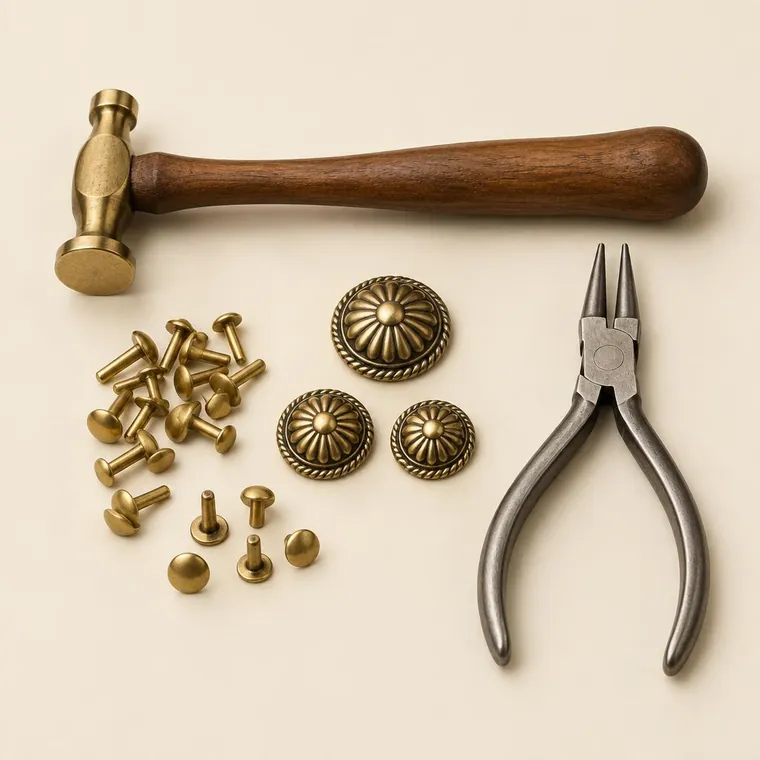
Hammer and rivets
For riveting studs, rings and brass buckles.
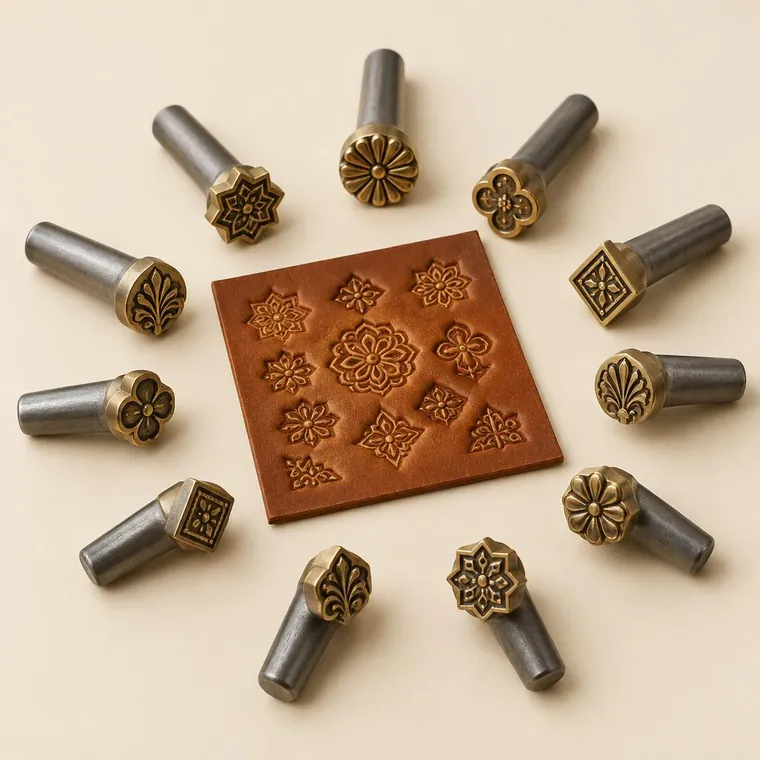
The decorative stamps
Shaped punches that repeat one motif dozens of times on cased leather.
Metal
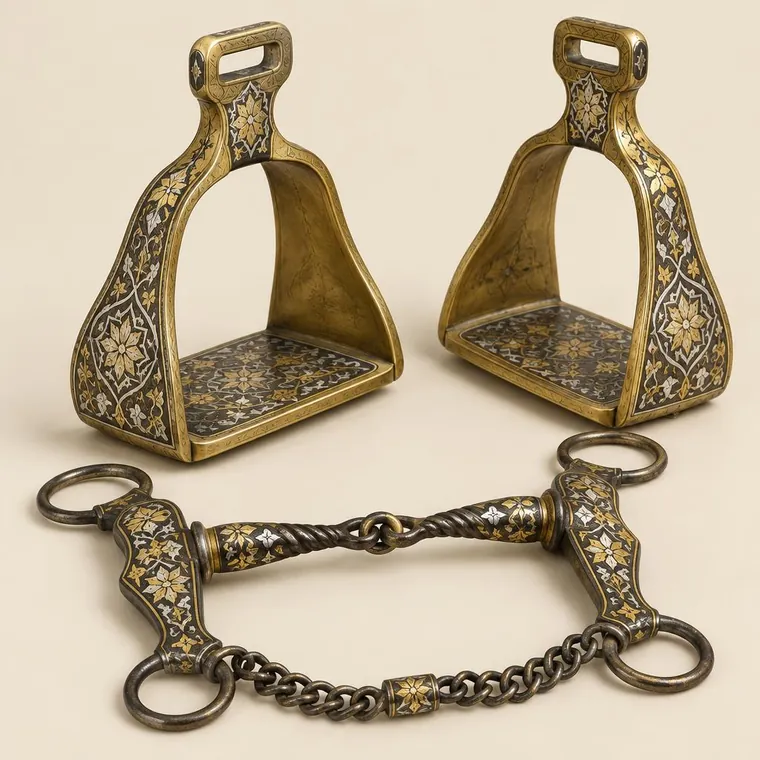
Stirrups and bit
Chiselled brass and damascened iron inlaid with gold and silver. The Maghrebi stirrup has a broad squared tread, not the European ring.
Felt
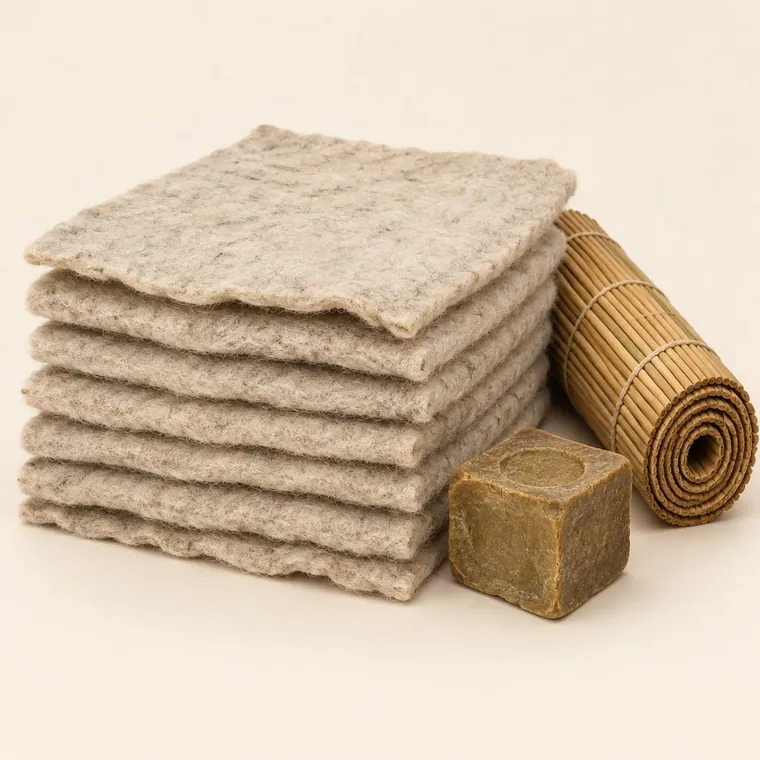
The felt
tarshīḥ
Seven to ten sheets of wool fulled with beldi soap. It is the first piece to go on the horse's back, and it limits friction with everything above it.
Colours and care
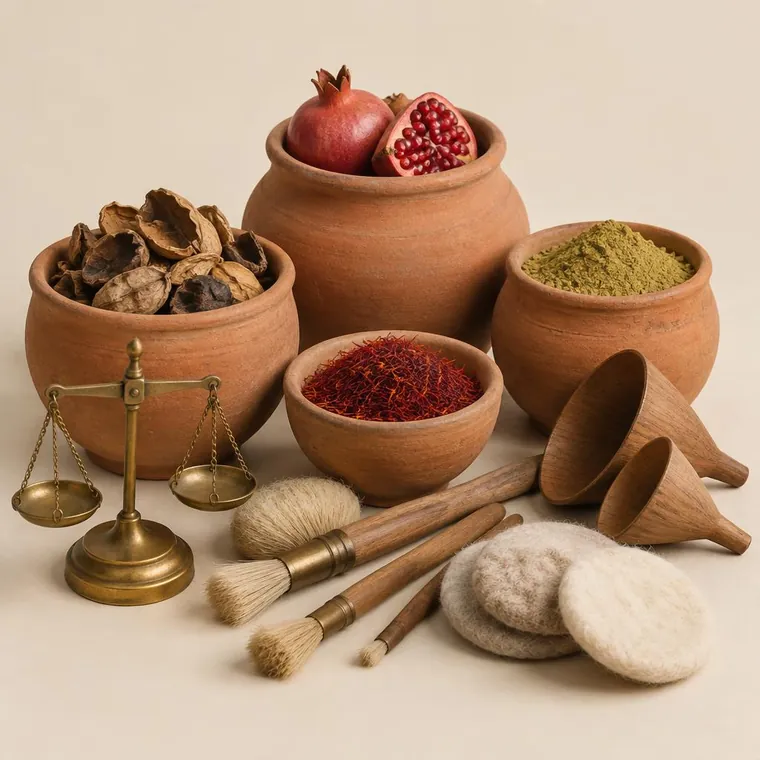
The dyes
Pomegranate, walnut husk, saffron, henna. In earthenware, because metal reacts with the tannins.
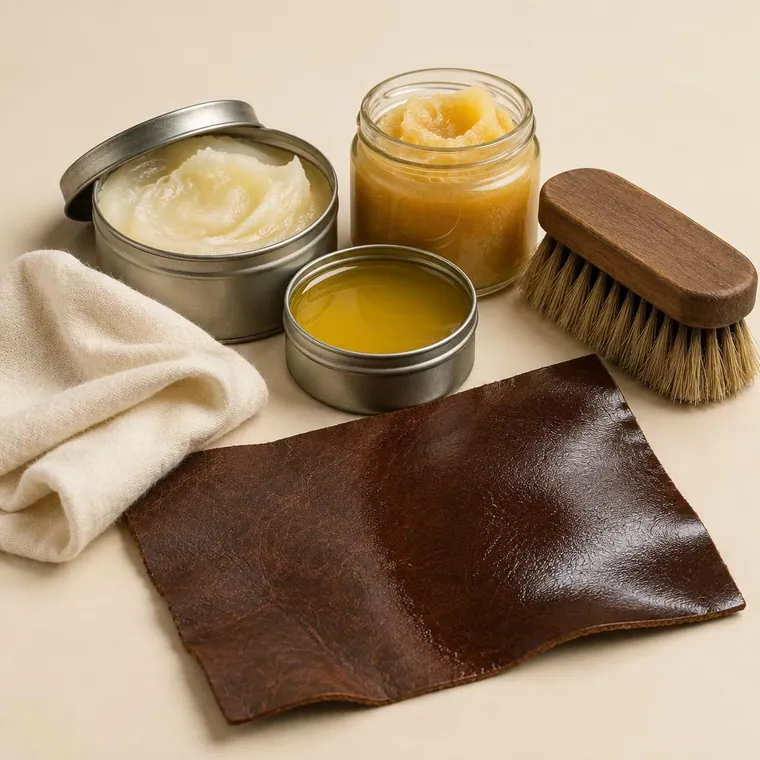
Greases and waxes
Tallow, oils, beeswax. Leather is fed or it dies.
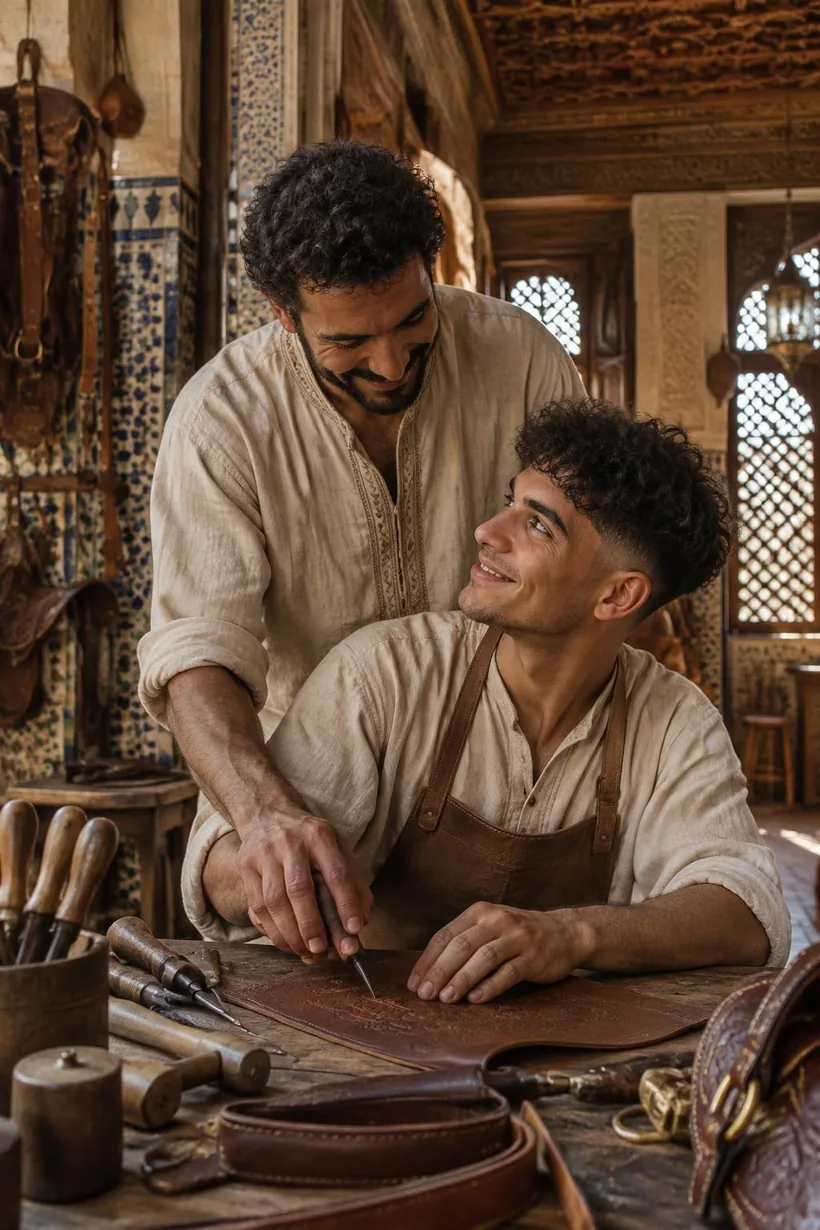
None of these objects teaches by itself. One learns beside someone who already knows, repeating the gesture until the hand possesses it: that is why the house is a house, and not a course.
The images on this page are study elaborations: the house does not yet own these tools. The terms of the house are gathered in the glossary of the house.