Life at the Riad
An ordered day. Five canonical prayers, craft work, formation of body and spirit, shared meals, silence.
الرِّياضُ لِأَهْلِهِ، لَا أَهْلُهُ لِلرِّياضِ
« The riad is for its own, not its own for the riad. »
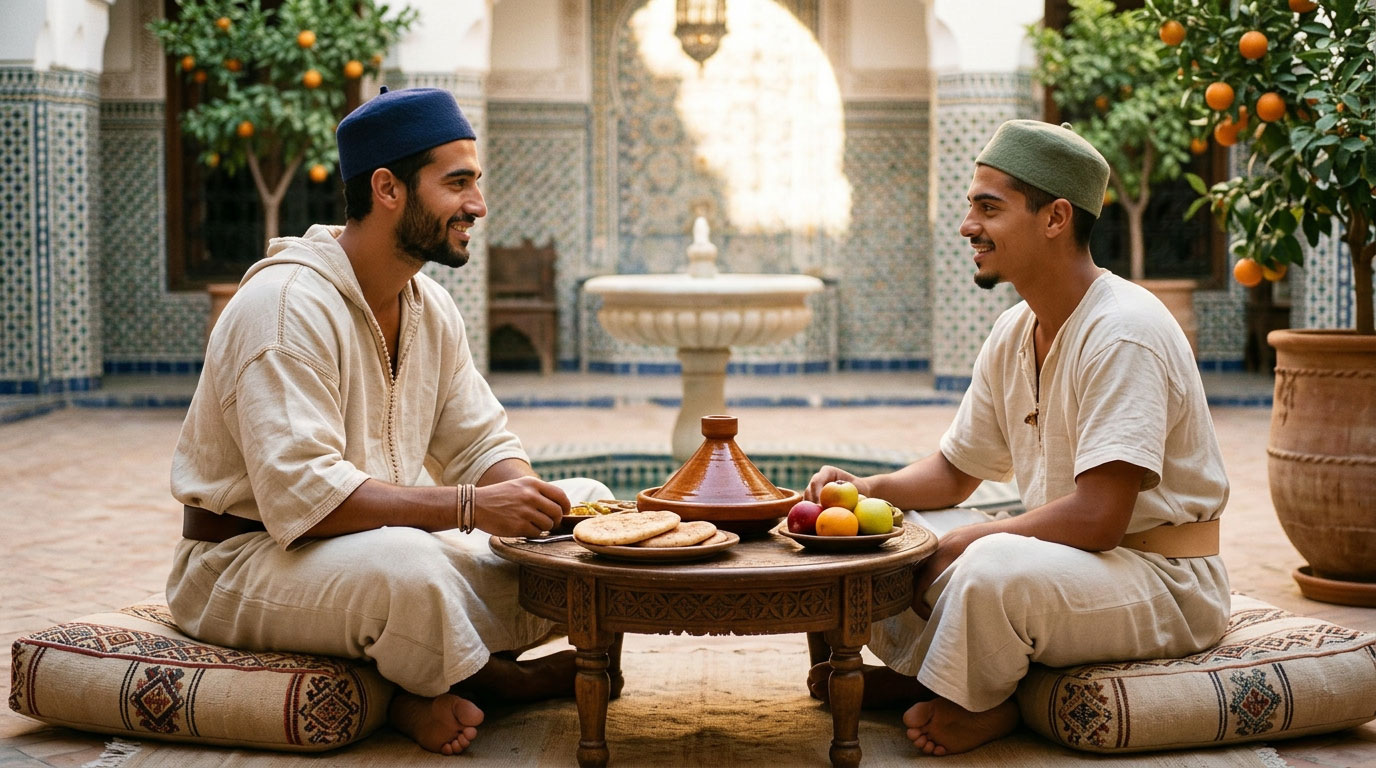
The Riad is not a hotel. It is a house that lives according to a clear rhythm: prayer structures time, the gesture forms the hand, study and the body complete the day. Here one does not consume an atmosphere — one enters, for a measured time, into a form of life.
The five canonical prayers — Fajr, Dhuhr, Asr, Maghrib, Isha — are not a spiritual décor. They already ordered the day of traditional houses; here they continue to do so.
Between dawn and night, the work of the crafts, formation, shared meals and silence each find their exact place.
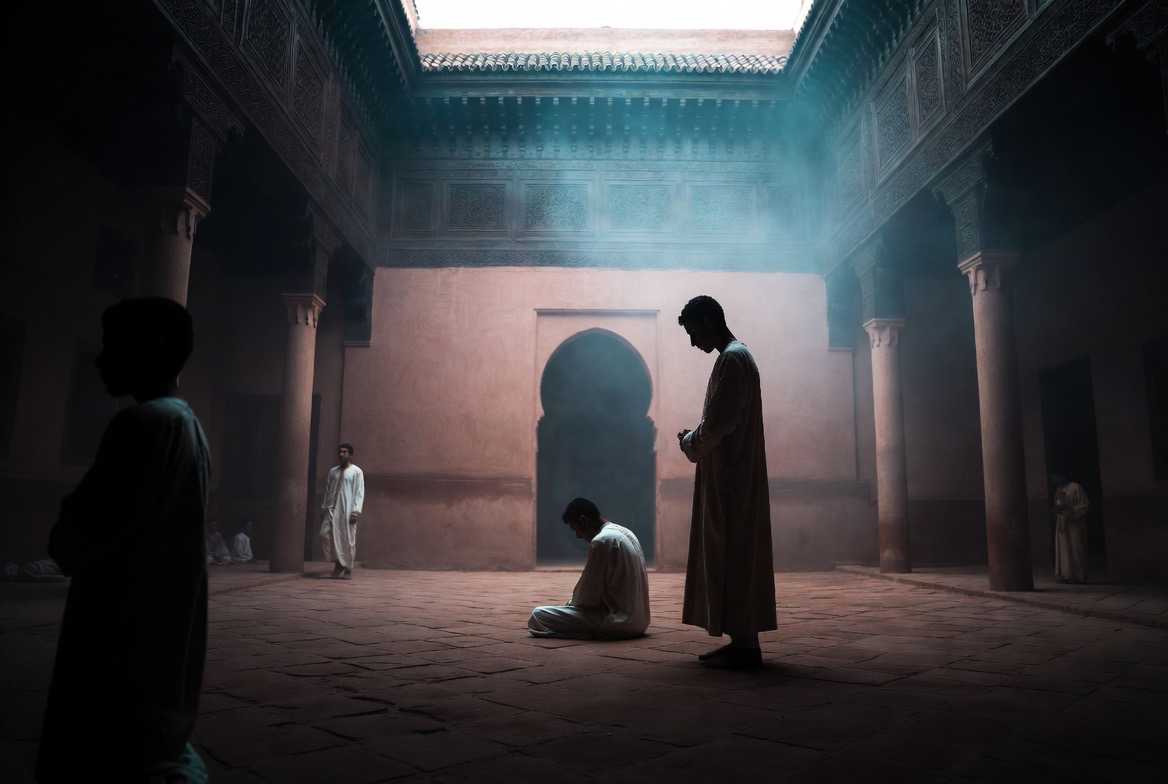
CANONICAL PRAYER — DAWN
Fajr
Dawn. The house rises in silence. Prayer opens the day before noise and before work. Then the frugal breakfast, and the beginning of study.
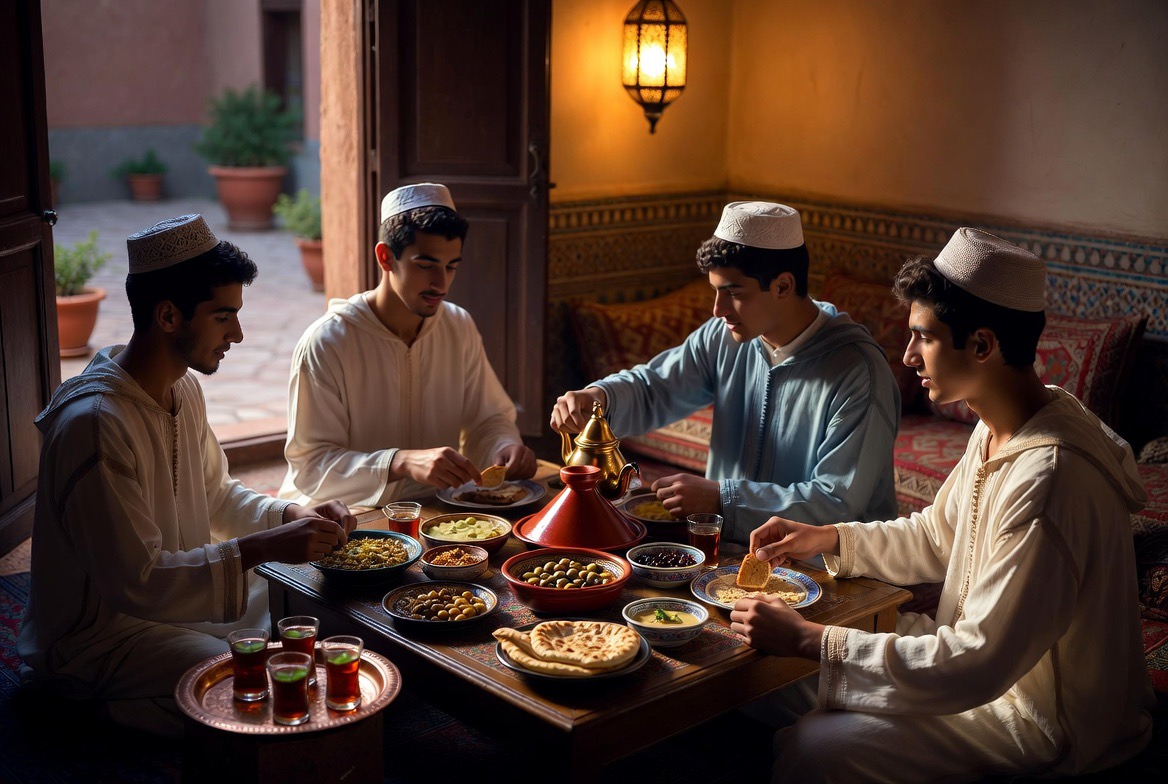
CANONICAL PRAYER — NOON
Dhuhr
Zenith. Pause from work. Prayer, then the shared meal. The common table is a place of formation as much as of nourishment.
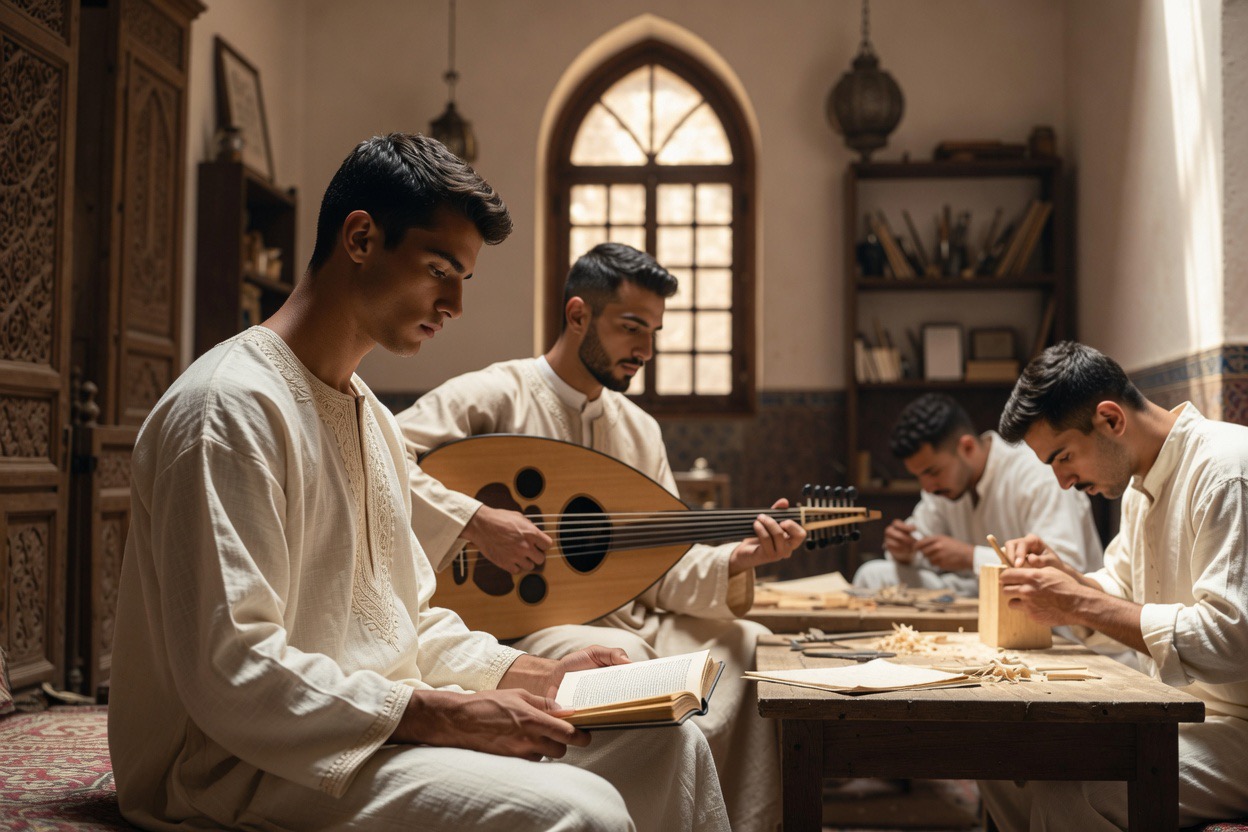
CANONICAL PRAYER — AFTERNOON
Asr
Afternoon. Return to the workshop or to the body. The light falls; the gesture continues, more concentrated.
CANONICAL PRAYER — SUNSET
Maghrib
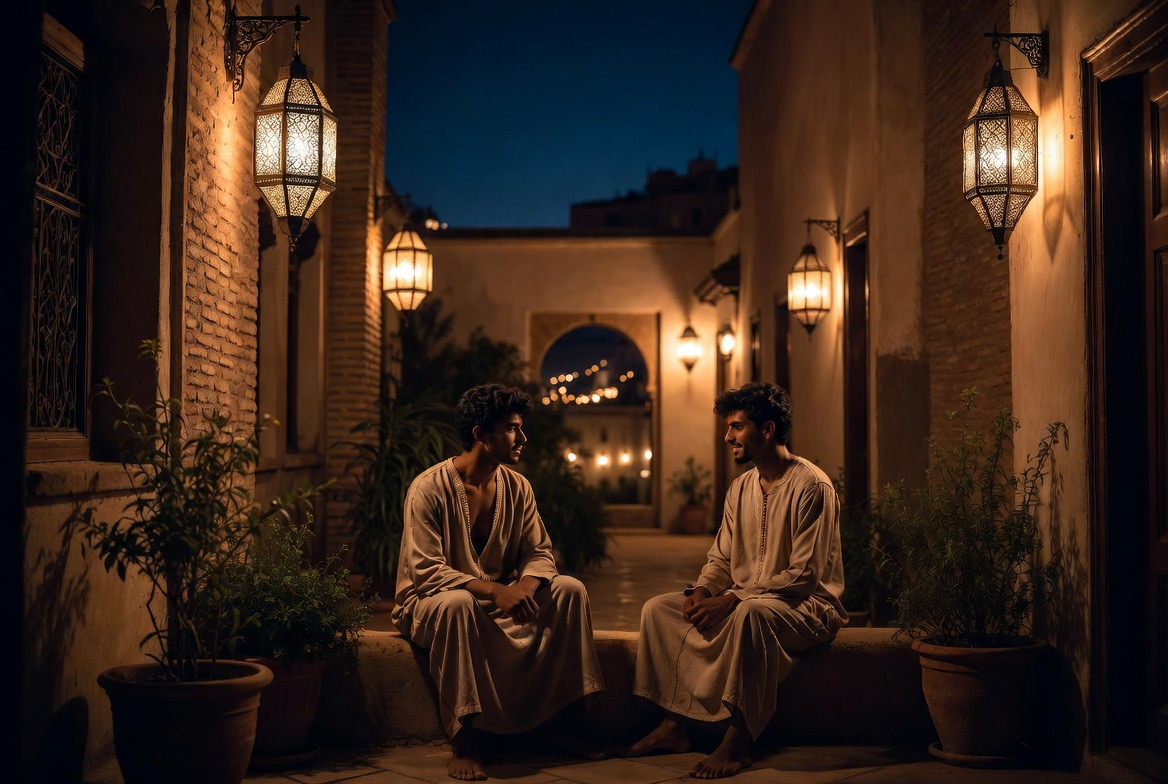
Sunset. The day of work ends. Prayer, then dinner. The evening conversation may begin.

CANONICAL PRAYER — NIGHT
Isha
Night. Last prayer. Then silence. The house gathers itself. No noise after Isha — except, sometimes, a vigil of samāʿ or a discreet conversation.
Craft, body, study: between the prayers, the day is full. Workshop in the morning, physical formation or choreutic discipline in the afternoon, according to the rhythm of the house and the path of each one.
This is not a programme to consume. It is a form of life to which one accords oneself — for a workshop, a stay, or the long residency.