رياض الأُنس
Riad Al-Uns
Traditional dwelling & intentional community
at the rhythm of beauty and tradition
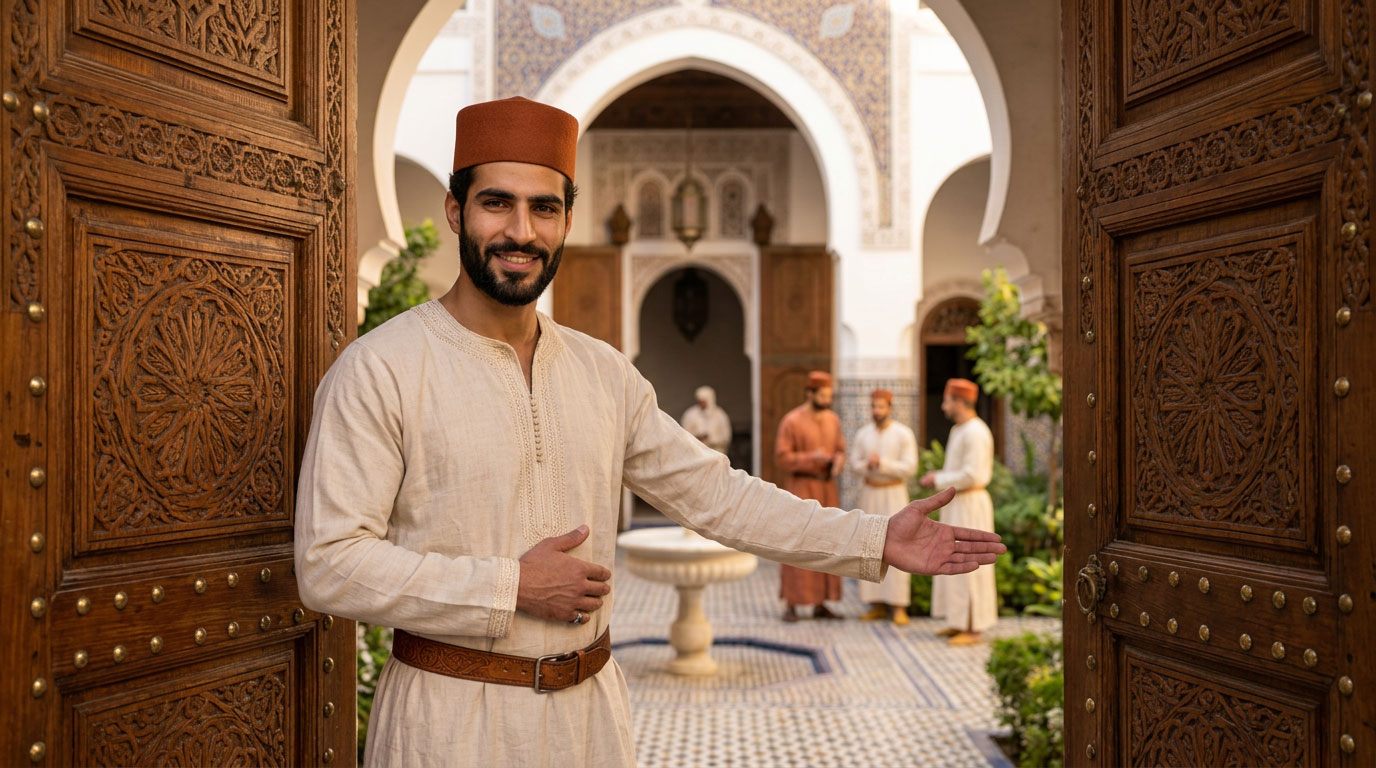
Riad Al-Uns is a human-scale intentional community, and not a hotel: young men in formation, ancestral crafts, prayer, study, shared life. A kosmos of tradition, art and beauty — where commitment means accepting the discipline of the day and the presence of others.
THE NAME
Riad Al-Uns رياض الأُنس
The name is a declaration, and not an ornament.
Riad (رياض) evokes the inner garden, the courtyard closed to the outside and open to the sky, the space of coolness, water and order which, for centuries, in the Maghreb and in al-Andalus, has made the house an oasis of measure and beauty. It is a way of inhabiting the world, and not merely a type of architecture.
Al-Uns (الأنس) is the Arabic word that designates intimacy, cordial familiarity, the companionship that banishes solitude (wahsha). It is the opposite of inner desolation. It is the human and spiritual warmth that arises when one is together with order, respect and presence. It is the full quietude of the one who knows he is not alone, far from noise and from confusion.
Thus Riad Al-Uns means, literally and in the highest sense:
- — the garden of intimacy,
- — the dwelling of true companionship,
- — the place where one learns to be with others and with oneself without scattering.
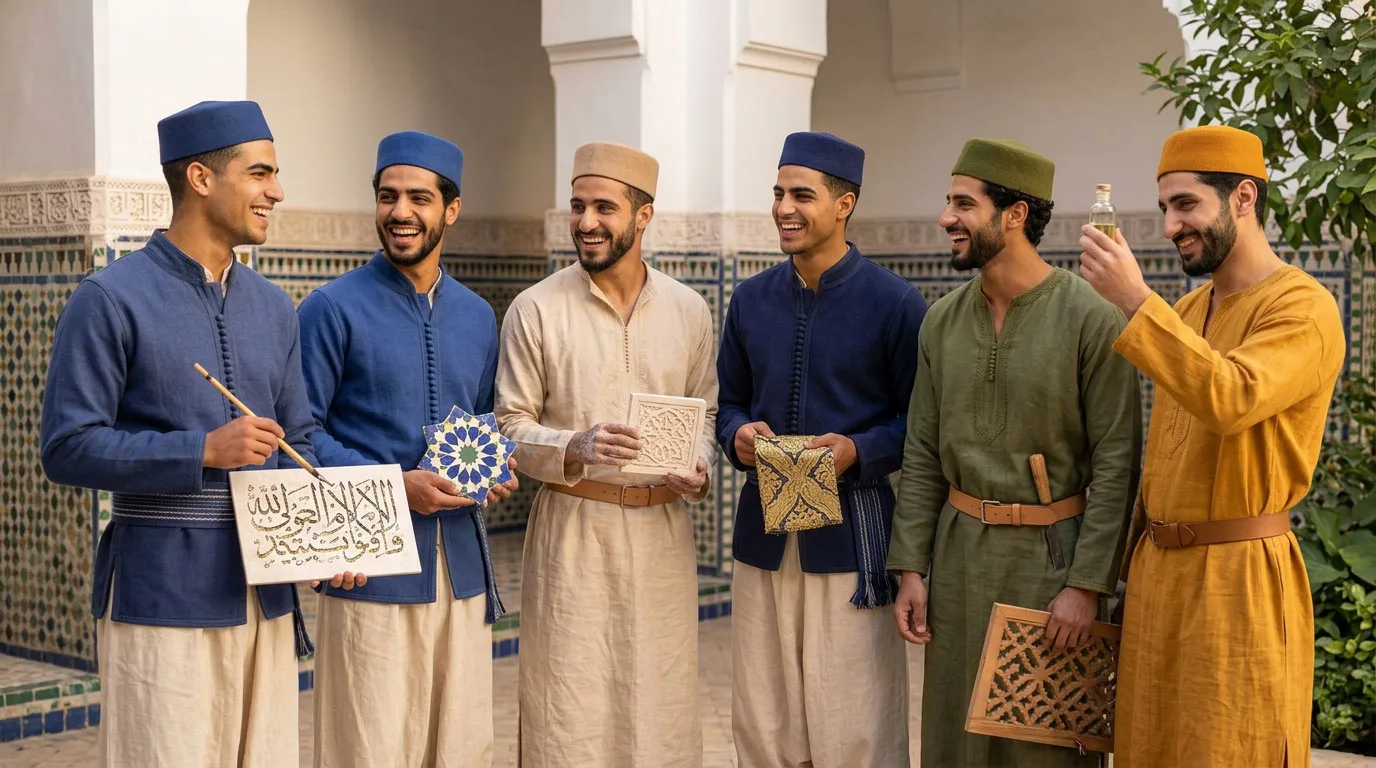
It is the description of what the house intends to be, and not a name chosen to sound exotic: an intentional community of adult unmarried young men who live, pray, work and study together, according to the ancient rhythm of the five prayers, the manual craft, the shared meal and silence. A place where the beauty of the architecture, the garden and the daily gestures educates the gaze and forms the character, in fidelity to the ideal of futuwwa.
The motto confirms it with clarity:
الرِّياضُ لِأَهْلِهِ، لَا أَهْلُهُ لِلرِّياضِ
« The riad is for its own, not its own for the riad. »
Non dominus domo, sed domus domino
Cicero, De officiis, I, 39
Al-Uns is a presence to be inhabited, and not a service to be consumed.
STATE OF THE PROJECT
A project, not yet a house
What these pages describe does not yet exist. Riad Al-Uns is a project — a precise vision, a place still to be found, a community that has not yet begun. What you see here is what we have in mind.
We are looking for patrons capable of carrying this project through to completion. Certain elements can also be supported one by one — a loom, the setting up of a workshop, the first year of a master craftsman — each with its own counterpart, in proportion to the contribution.
Such a project of cultural continuity cannot be built alone.
WHO THESE PAGES ARE FOR
Three doors
Apprentice, patron, scholar: three audiences, three paths. The page gathers the doors without mixing them.
Who these pages are for →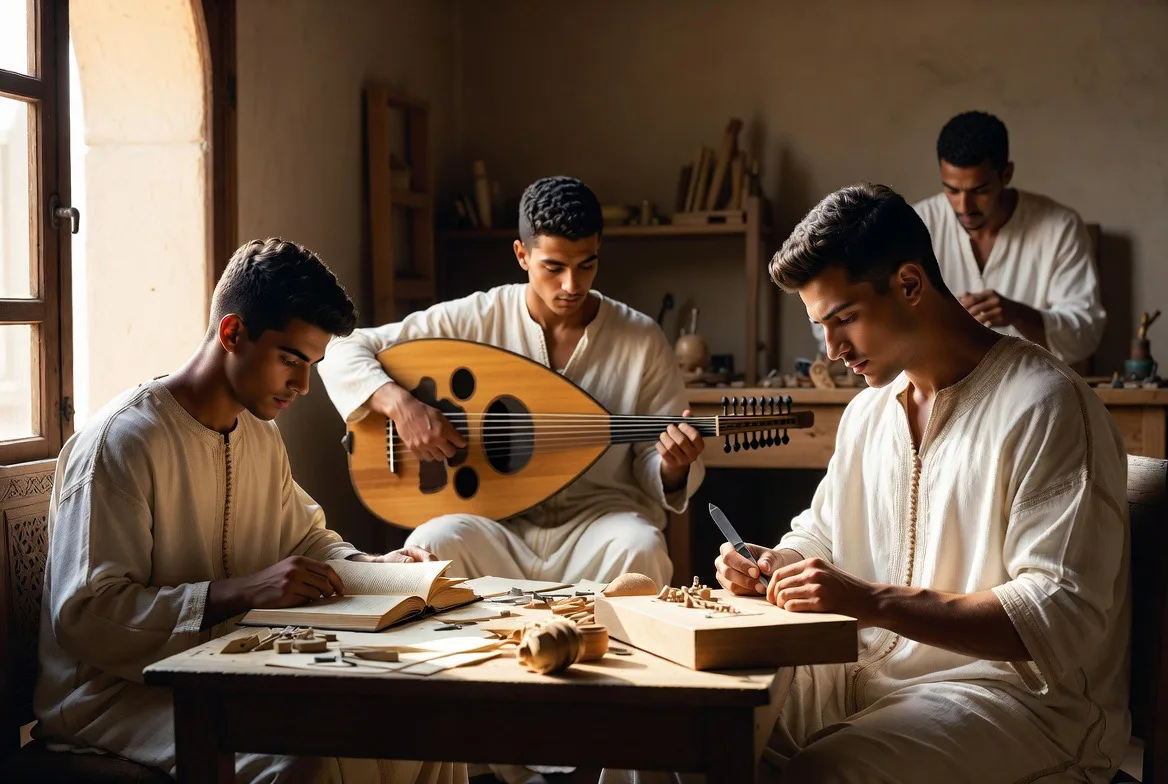
Architecture, garden and daily life as an expression of balance and dignity.
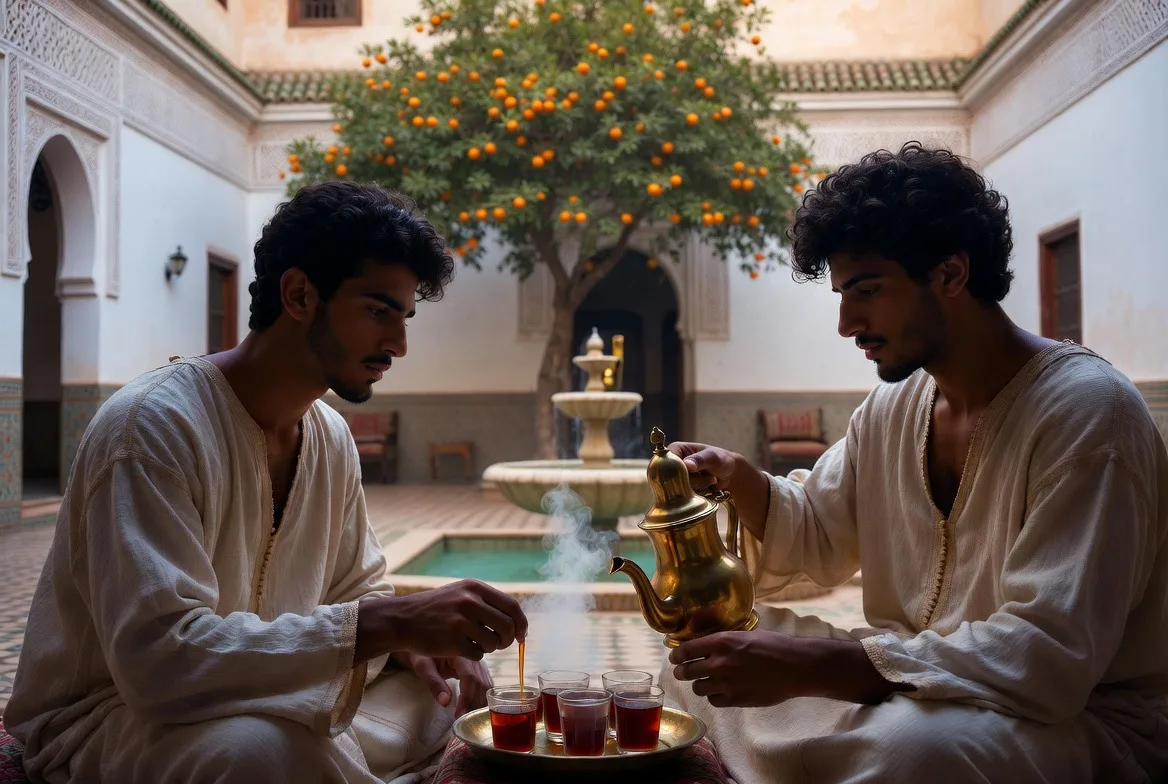
Five prayers, manual craft, shared meals, silence. An ordered and embodied day.
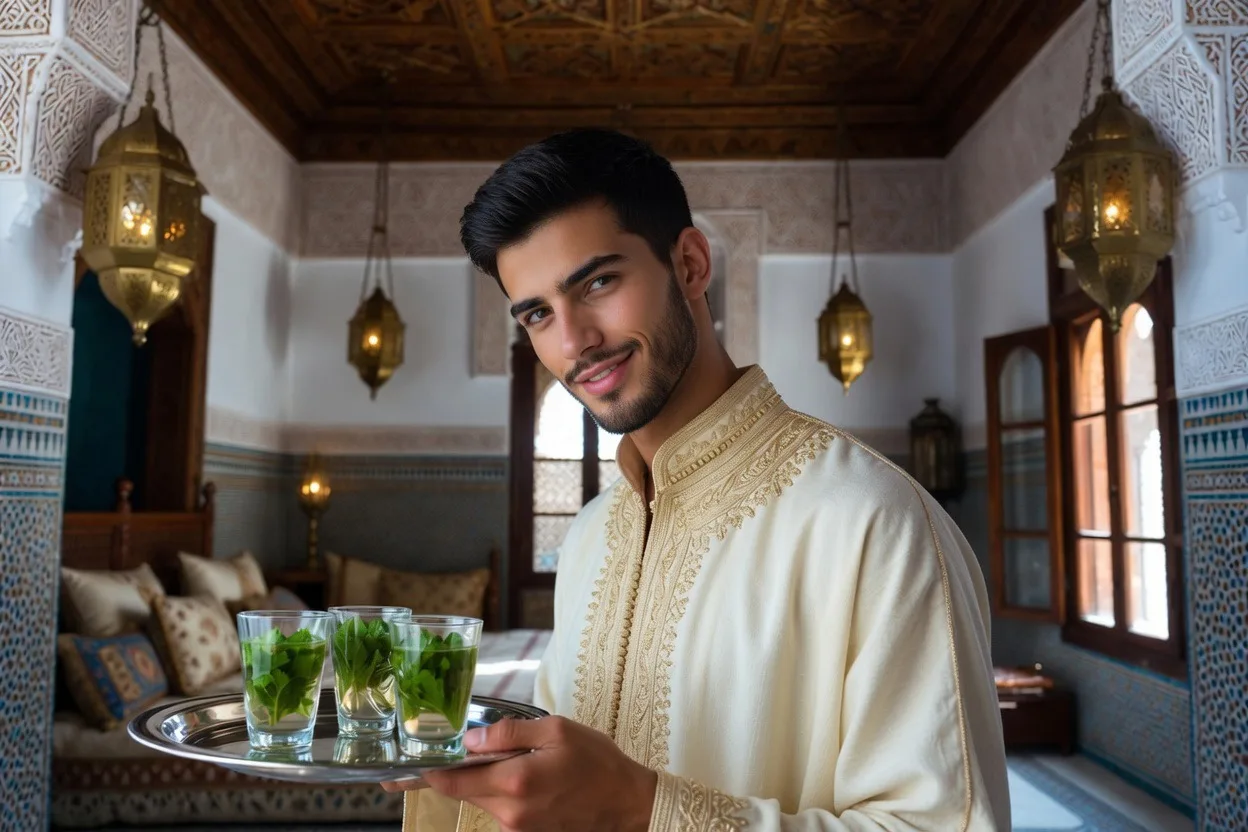
Very few guests, and nothing that does not serve a purpose.
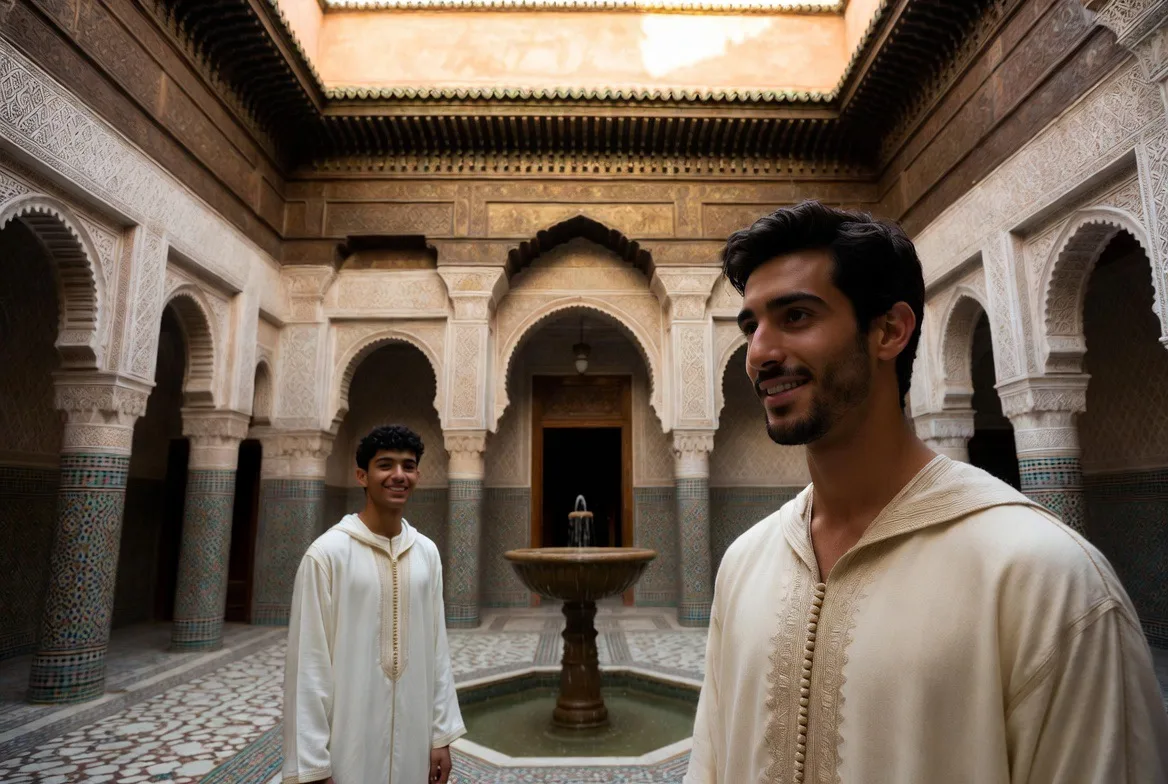
The garden, water, natural coolness — space as an expression of balance.
FORMATION
Dar al-Hiraf
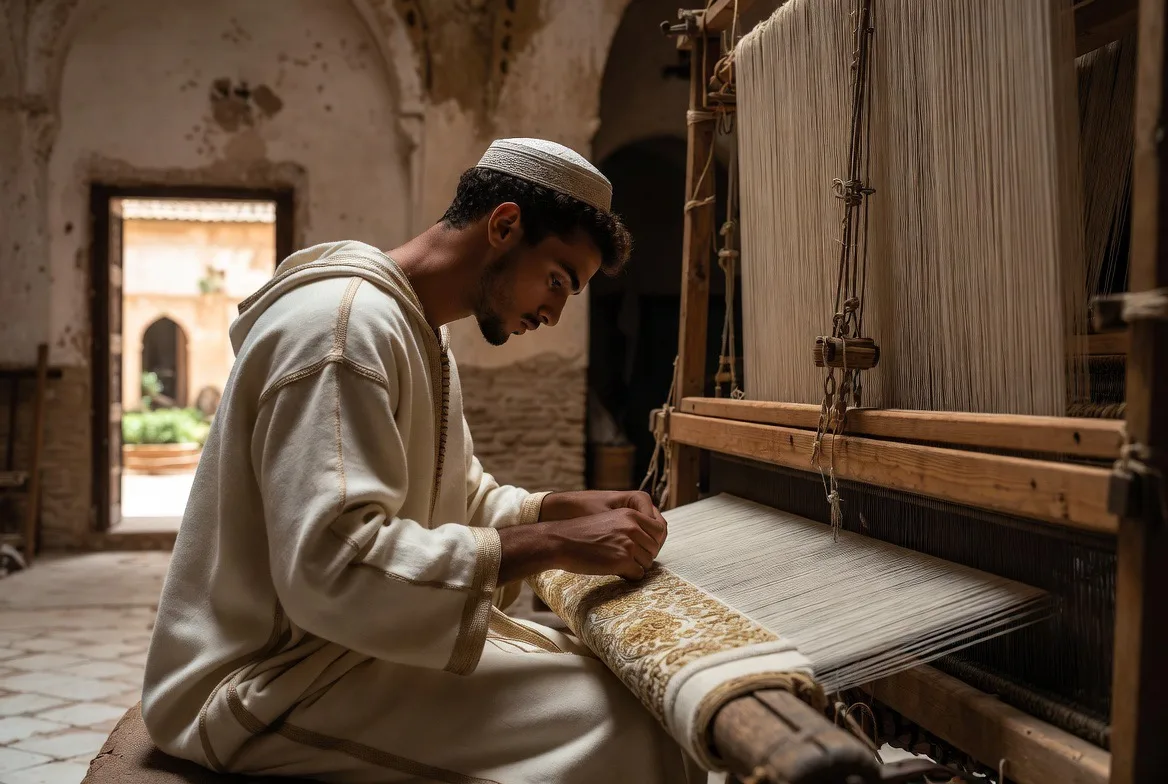
House of crafts and residency for adult unmarried men. Leather, iron, wood — the one workshop the house begins with — and the formation of the gesture, of character and of faith, which also prepares, tomorrow, to found a worthy home and a family.
ENTERING THE HOUSE
Three doors, and a house apart
Three paths, according to what one seeks.
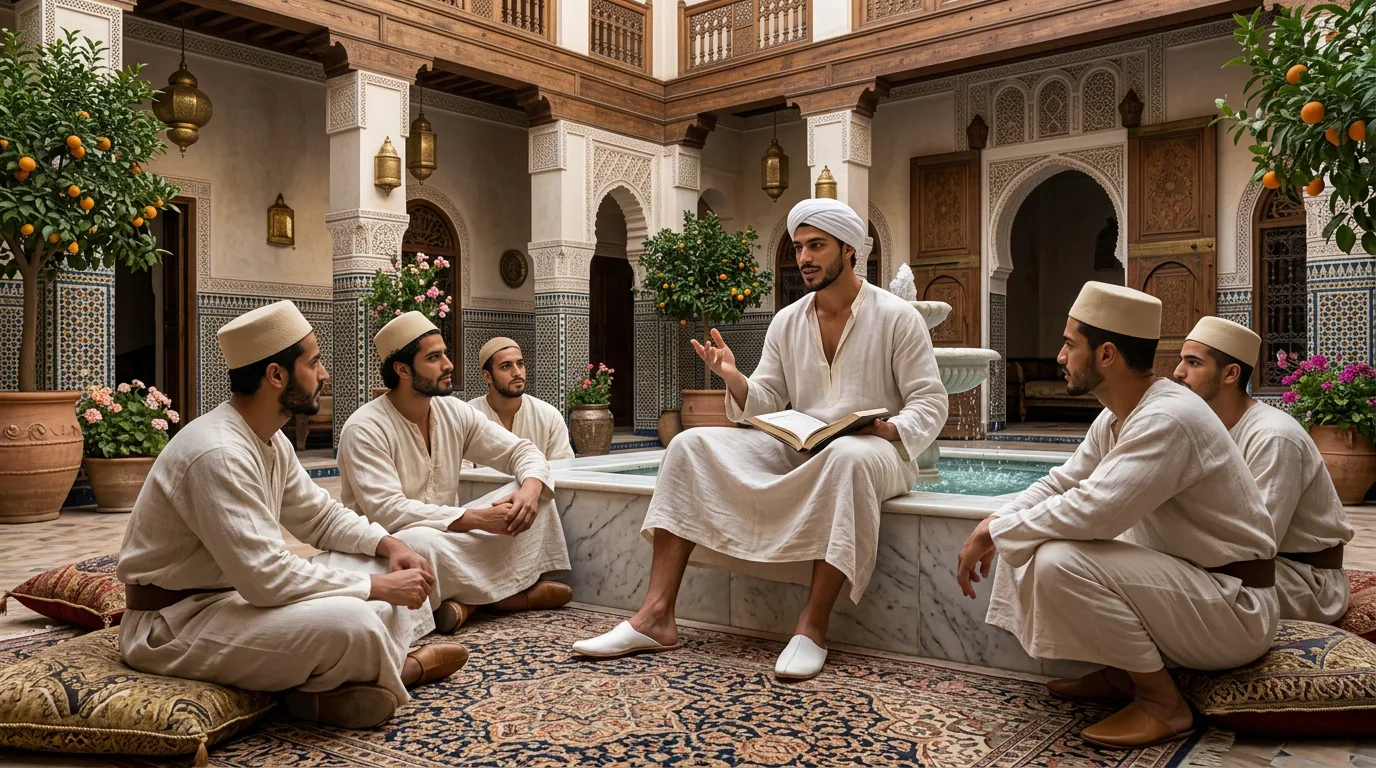
Staying
A limited time, in the rhythm of the house — without commitment.
Discover →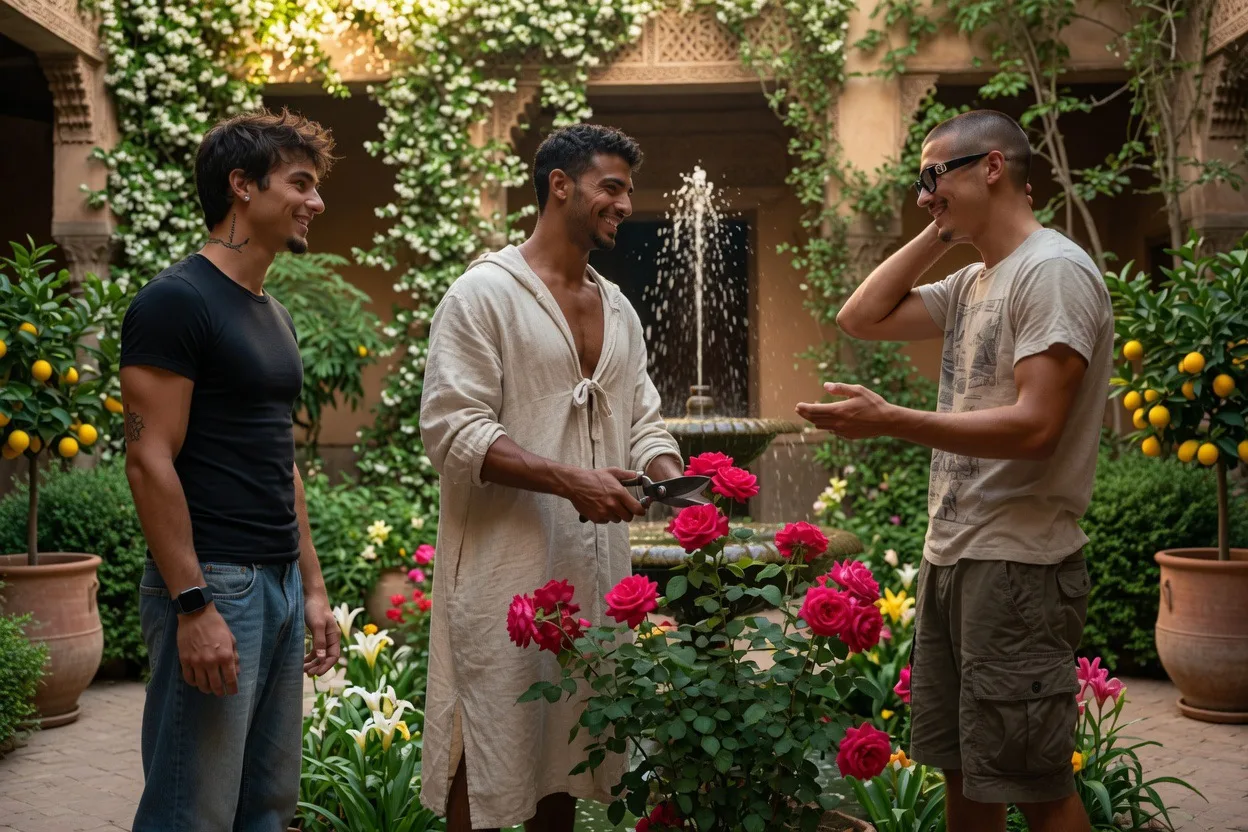
Formation workshops
A few weeks to touch a craft — before committing further.
Discover →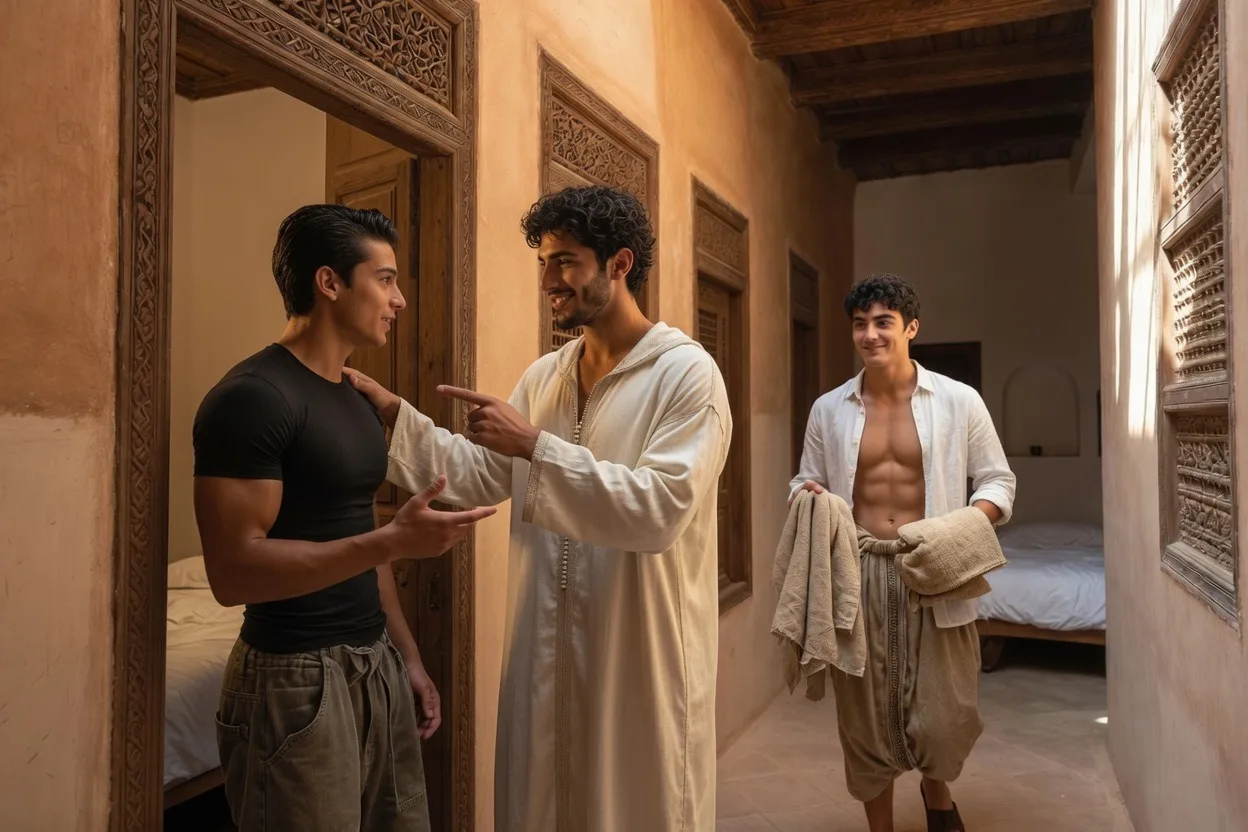
The residency
The long commitment: the craft, the body, the faith, common life.
Discover →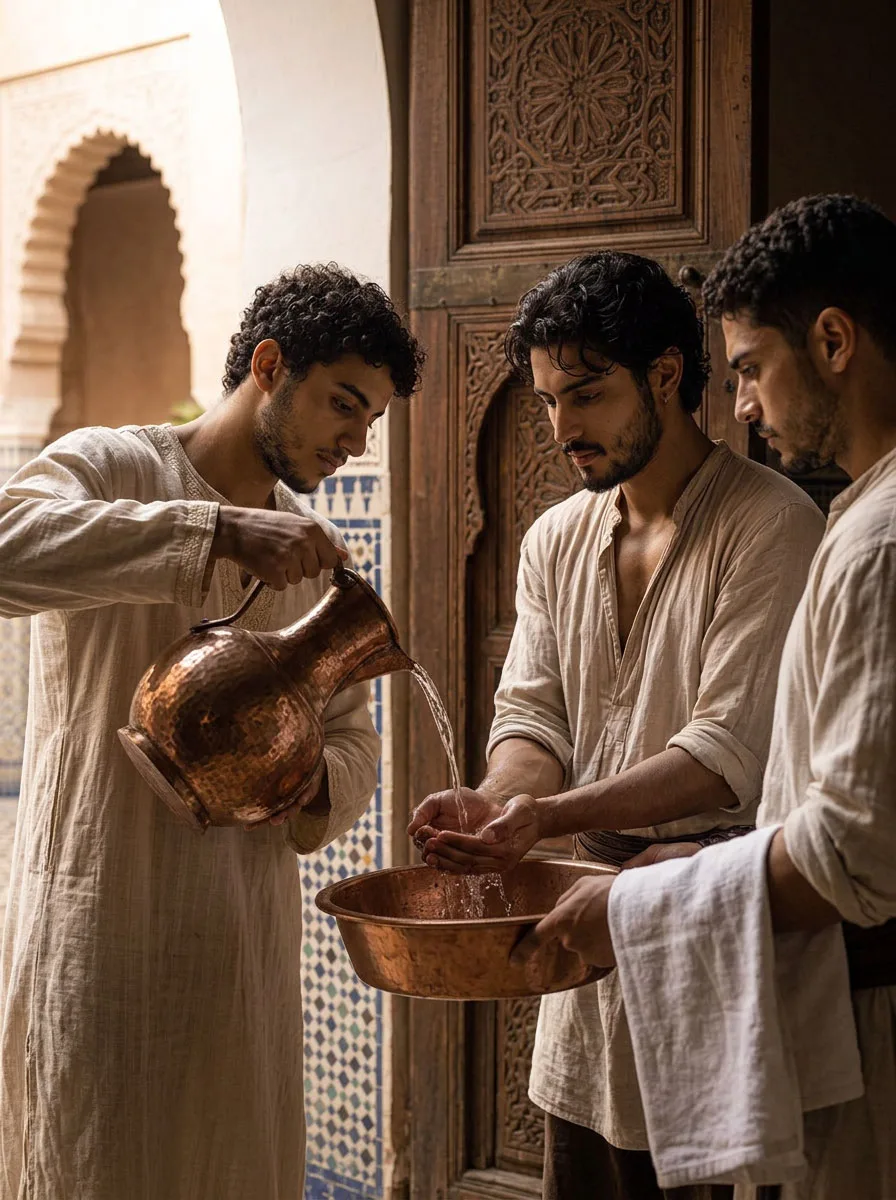
ANOTHER HOUSE
The guest of the Munya
Al-Munya is the adjoining house. One is received there on introduction or invitation — never through the three doors of the Riad. A passage into the Riad remains a gesture of those who live there.
WHAT ONE LEAVES BEHIND
أثر
Al-Athar
No one leaves Dar al-Hiraf without having left, in its walls, a work of his own hand. A panel, a door, a basin, an inscription above a threshold — something that stays, and cannot be taken back.
One does not come here to carry something away. One comes to leave an imprint carved to last.
The rule of the work left behind →